

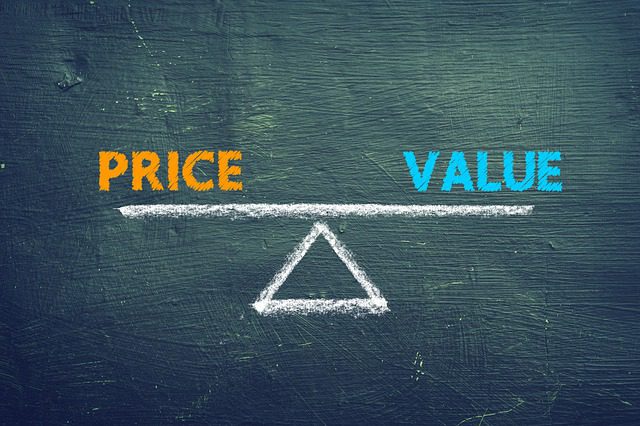
Why Lowering Your Price is a Terrible Business Move
If you own a business, you have almost certainly been asked to lower your price. While it might seem like a quick way to close a deal, from my two decades of experience in the service industry, I can tell you that lowering your price is almost always a terrible business move.
It’s a short-term tactic that can cause long-term damage to your brand and your bottom line.
This guide will break down the psychology behind pricing, the hidden costs of discounting, and how you can confidently communicate your value to secure deals you’ll be happy with.
Table of contents
Key Takeaways
- Profitability is Key: Lowering your price directly erodes your profit margins, forcing you to sell significantly more just to break even.
- Value Perception Matters: Competing on price teaches customers to see your product as a commodity, not a valuable solution. This damages your brand’s long-term perception.
- Focus on Value Communication: Instead of discounting, prepare to articulate the unique benefits and return on investment your service provides.
- Strategic Discounts are Rare: While there are exceptions, such as clearing old inventory, regular discounting is an unsustainable business model.
Here’s a “Lowering Your Price” Call That I Went Through Recently
I had a guy call me the other day who was interested in my services but wanted to discuss my rates. He mentioned that he could get content produced at a lower price than mine and wanted to know what my best price was.
Related Article: Is Brand Loyalty More Powerful Than Price?
Truth be told, I laughed out loud on the phone, which clearly got his attention. I asked him, “Why would you ask me to lower my worth and value for my services? I’d love to buy your supplements, but I can buy the same products from somewhere else for less. Are you interested in lowering your price for me?”
He paused for a moment and asked why he should lower his prices, stating that he doesn’t do that. I responded, “If you aren’t lowering your prices when I ask you, why would you expect me to? Do you go to the grocery store and ask the butcher to lower the price of meat because you can get it cheaper somewhere else? Or do you contact Amazon and ask them to lower their price on an item you can get cheaper on a different website?”

At this point, I could tell he was offended, and quite frankly, I didn’t care. I replied, “I don’t think we can do business and work this out. If in our first conversation you’re already demanding that I lower my price, I can only imagine what it would be like to work with you on projects. You can’t call me up and expect me to lower my prices but then get offended when I ask if you’re lowering your price. It doesn’t work that way.”
I politely thanked him for the call and wished him the best before we hung up. Funny enough, he called me back a few days later to apologize. He said he was just trying to get the best deal but understood my position and the value I bring with over 20 years of experience in the industry.
He then told me he’d like to move forward with my writing services at my standard rate. He requested one article per week for the year, 52 articles in total, on any topic I find relevant to help his business and bring traffic to his website. He even offered to pay for everything upfront as an apology. I declined the upfront payment and told him I’d invoice him monthly so that he wasn’t out the full amount. He appreciated that, and we’ve been working together successfully ever since.
Related Article: What is a Wordsmith and Why Does Your Business Need One?
So, where am I going with this story? It’s a real-world example of why standing your ground on pricing is crucial for your business.
Selling Based on Lowering Your Price is a Terrible Idea
Selling based on price is a race to the bottom that devalues your product or service and positions your brand as “cheap.” This is not just an opinion, it’s a well-documented psychological principle in business.
Consumers often use price as a mental shortcut to determine quality, a concept known as the “price-quality heuristic.” A higher price can signal exclusivity and superior quality, which is a strategy luxury brands like Apple and Starbucks use to maintain high profit margins and a loyal customer base. If you compete on being the cheapest, customers will likely assume your quality is also the lowest.
Instead of undercutting competitors, you should focus on clearly communicating the value and benefits of what you offer. This creates a stronger foundation for long-term profitability and customer loyalty.
A great book I highly recommend on this topic is Sell or Be Sold by Grant Cardone. It has a ton of great information that can help you reframe how you think about sales and pricing.
Why Your Business Should Never Consider Lowering Your Price to Compete

Engaging in price wars to compete can be detrimental to your business for several reasons. Here are four critical reasons to understand.
1. Decreased profit margins
This is the most direct consequence. Lowering your price eats directly into your profit margins, making it harder to sustain your business. Consider the math: for a business with a 25% gross profit margin, a 10% price discount means you need to sell 67% more volume just to make the same amount of gross profit. A study published in 2025 noted that a mere 1% reduction in price can slash operating profits by as much as 12-15%.
2. Devalue the product
Price cuts can make customers perceive your product or service as less valuable. This hurts your ability to charge higher prices in the future and can erode customer loyalty.
A famous example of this was JCPenney’s “fair and square” pricing strategy in 2012. They eliminated coupons and constant sales in favor of everyday low prices. Customers, however, felt they were no longer getting a deal, and sales plummeted by over 25% in the first year because the perceived value was gone.
3. Commoditization
When you compete solely on price, you turn your unique service into a simple commodity. This makes it incredibly difficult to differentiate your business from competitors. Instead of being known for quality or expertise, you become known as the “cheap option.” This attracts bargain-hunters who have no loyalty and will leave as soon as they find a lower price elsewhere.
4. Cost-cutting
Slashed profit margins inevitably force you to cut costs elsewhere. This can mean using lower-quality materials, reducing customer service, or cutting back on innovation. Ultimately, this negatively impacts the quality of your product or service, further damaging your brand reputation and driving away the very customers you need to grow.
Instead of lowering your price, focus on differentiating your business through a superior product, exceptional customer service, or other unique value propositions. This will help you attract and retain customers while maintaining profitability.
What Should You Tell Someone Who Wants You to Lower Your Price?

When someone asks you to lower your price, it is crucial to handle the conversation with confidence. Your goal is to shift the focus from price to value and explain why your pricing is fair and reasonable.
Here are a few effective ways to respond, shifting the conversation back to the value you provide:
- Reframe the conversation around their needs: “That’s a fair question. Before we discuss numbers, let’s make sure my services are the perfect fit for your goals. Can you tell me more about what you’re hoping to achieve?” This approach, recommended by sales experts, delays the price talk until you’ve fully established the value.
- Directly connect price to value: “I understand that price is an important factor. My rates reflect the expertise, quality, and results I deliver. Lowering the price would mean compromising on the value I’m committed to providing my clients.”
- Offer alternatives instead of discounts: “My price for that package is firm, but I understand working within a budget. We could explore adjusting the scope of the project to better fit your current needs. For example, instead of three deliverables, we could start with two.”
- Reinforce competitive positioning: “I appreciate you asking. My prices are set competitively based on the value and comprehensive service offered. I’m confident that I provide a premium solution at a fair price in this industry.”
Related Article: How Hiring an Independent Contractor Saves You Money
The key is to listen to their concerns and understand their perspective. Once you know what they truly need, you may be able to find a solution that works for both of you without simply lowering your price.
FAQs About Pricing Strategy
When is it okay to offer a discount?
Strategic discounting can be effective in specific, limited situations. According to small business advisors, these scenarios include clearing out old inventory, launching an introductory offer for a new service to gain traction, or creating a leveraged product like a group course where volume can offset the lower price point. The key is that the discount must have a clear strategic purpose, not just be a reaction to a customer’s request.
How can I communicate my value more effectively?
Start by creating a clear “unique value proposition.” This is a short statement that explains how you solve your customer’s problem in a way your competitors don’t. Focus on tangible benefits like time saved, revenue increased, or efficiency gained. Using customer testimonials and case studies provides powerful social proof and makes your value proposition more credible.
What is a value-based pricing strategy?
Value-based pricing sets your price according to the perceived value you deliver to the customer, rather than just your costs or competitor prices. Companies that effectively use this strategy, like Salesforce and Adobe, align their pricing with the significant ROI their products provide. Studies have shown that this approach increases customer loyalty and profit margins.


*Disclosure: This article may contain affiliate links or ads, which means we earn a small commission at no extra cost to you if you make a purchase through these links. These commissions help support the operation and maintenance of our website, allowing us to continue producing free valuable content. Your support is genuinely appreciated, whether you choose to use our links or not. Thank you for being a part of our community and enjoying our content.
PLEASE CONSIDER SHARING THIS ON YOUR SOCIAL MEDIA TO HELP OTHERS LEARN MORE ABOUT THIS TOPIC.