
Exercise Tips While Recovering From an MCL Injury
Dealing with a medial collateral ligament (MCL) injury can feel like a major setback, but a smart approach can get you back on track safely and effectively. As a certified strength and conditioning coach, I’ve guided many people through this exact process.
The MCL is the set of tissues connecting your thigh bone (femur) to your shinbone (tibia), and its main job is to keep your knee stable.
Sometimes, a sharp over-extension or over-rotation of the knee leads to the tearing or twisting of the MCL. This can also happen from a direct injury or repeated stress, which ultimately causes an MCL injury.
This guide will give you the essential exercise tips for recovering from an MCL injury, helping you rebuild strength and confidence with every step.
Disclaimer: This article is for informational purposes only and is not meant to treat or diagnose any condition. It is recommended that you speak with your doctor before starting any exercise program, changing your daily nutrition, or adding any supplements to your regimen.
Table of contents
Key Takeaways
- MCL injuries are graded from 1 (mild) to 3 (complete tear), which determines the recovery timeline and treatment plan.
- Most MCL injuries, even severe ones, can heal without surgery using methods like the R.I.C.E. protocol, bracing, and physical therapy.
- Rehabilitation exercises are critical for restoring range of motion, rebuilding strength in the quadriceps and hamstrings, and preventing future knee injuries.
- Always get clearance from a doctor or physical therapist before starting any exercise program to ensure the movements are safe for your specific grade of injury.

Symptoms and Diagnosis of an MCL Injury
The first step in a successful recovery is getting an accurate diagnosis. The signs of an MCL injury are usually quite clear and localized to the inner side of your knee.
Common signs and symptoms of an MCL injury include:
- A “popping” sound at the moment of injury
- Pain that can range from mild to severe
- Swelling around the knee joint
- Tenderness on the inner part of the knee
- A feeling of stiffness
- Locking or catching of the knee joint
- A feeling of instability, as if your knee might give out
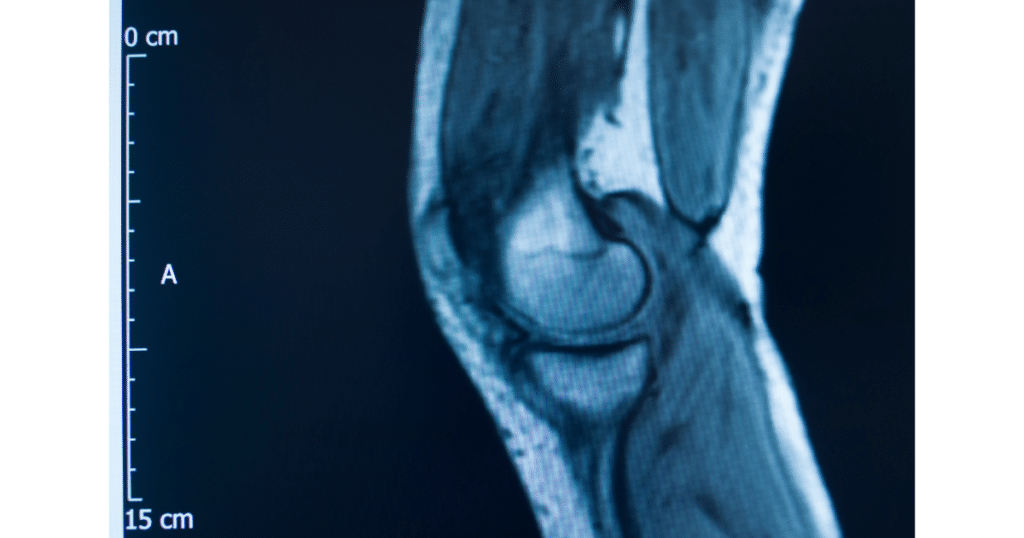
To confirm the diagnosis, a doctor will perform a physical exam, which often includes a “valgus stress test.” This involves gently pushing the knee sideways to check the MCL’s stability. For a more detailed look, imaging tests like an X-ray or an MRI scan are used to rule out fractures and see the ligament damage clearly.
MCL injuries are classified by grade, which dictates the treatment plan:
- Grade 1: A mild sprain with microscopic tearing. You’ll experience tenderness but little to no swelling. Recovery often takes one to three weeks.
- Grade 2: A partial tear of the ligament. This usually involves significant pain, swelling, and some instability. Healing typically takes two to four weeks.
- Grade 3: A complete tear or rupture of the MCL. The knee will be very unstable, with considerable pain and swelling. Recovery can take four to eight weeks or longer.
While an average MCL knee injury can take up to six weeks to heal, your specific timeline will depend on the grade of your injury and your doctor’s recommendations.
Related Article: How to Effectively Utilize Stretches for Shin Splints

Treatment Options for an MCL Injury
The good news is that the vast majority of MCL injuries, over 90% in fact, heal successfully without the need for surgery. The ligament has a strong blood supply, which helps it repair itself effectively.
Initial treatment focuses on managing pain and swelling with the R.I.C.E. method.
- Rest: Avoid activities that cause pain.
- Ice: Apply an ice pack wrapped in a towel for 15-20 minutes at a time to reduce swelling.
- Compression: Use an elastic bandage to help control swelling.
- Elevation: Keep your knee propped up above the level of your heart.
In addition to R.I.C.E., your doctor may also recommend:
- Wearing a knee brace: For Grade 2 or 3 injuries, a hinged knee brace is often used to provide stability and protect the ligament as it heals.
- Taking pain relievers: Nonsteroidal anti-inflammatory drugs (NSAIDs) like ibuprofen can help manage pain and reduce inflammation.
- Using crutches: This helps take weight off the injured knee, especially in the early days after the injury.
In rare, severe cases where the ligament is torn in a way that it cannot heal on its own or if other knee structures are damaged, a surgeon might perform a procedure to repair the ligament.
Rehabilitation and Exercises for an MCL Injury
Physical therapy and a structured exercise program are essential for a full recovery. Rushing back to activity without properly rebuilding strength and stability is a recipe for re-injury.
A good rehabilitation program focuses on four key goals:
- Regain strength and stability in the muscles surrounding the knee.
- Restore the full range of motion in your leg.
- Prevent muscle atrophy, which is the breakdown of muscle tissue from lack of use.
- Improve your balance and proprioception, your body’s awareness of its position in space.
Always get clearance from your doctor or physical therapist before you begin these exercises. They can tell you when it’s safe to start and how to progress based on your specific MCL injury.
1. Heel Slides
This exercise helps restore flexion in your knee. Lie on your back with your legs straight. Slowly slide the heel of your injured leg toward your buttocks, bending your knee as far as you comfortably can. Hold for a moment, then slowly straighten it back out. Do not force the movement.
A great pro-tip is to use a towel or strap around your foot to gently assist the movement, giving you more control. Aim for 10 to 20 repetitions daily.
2. Straight Leg Raise
This move strengthens your quadriceps, the muscles at the front of your thigh, which are crucial for knee stability. Lie on your back with your uninjured leg bent and your injured leg straight. Tighten your quad muscle first, then slowly lift your straight leg about 8 inches off the floor. Hold for 5 seconds, then slowly lower it.
The key is to keep your quad engaged the entire time. This ensures you are strengthening the right muscles to support your knee. Perform 15 repetitions.
3. Heel Prop
Regaining full extension, or the ability to completely straighten your knee, is a critical recovery milestone. Sit on a chair or the floor and prop the heel of your injured leg on a stool or rolled-up towel. Let gravity gently straighten your knee.
To increase the stretch, you can place a light weight, such as a two-to-five-pound ankle weight, on your thigh just above the knee. Hold this position for five minutes, and repeat it three times a day.
4. Standing Hamstring Curls
Strong hamstrings help balance the pull from your quadriceps and protect your ligaments. Stand straight, holding onto a wall or chair for support. Slowly lift the heel of your injured leg up toward your buttocks, bending your knee. Hold for 10 seconds, then lower it with control. Aim for 20 repetitions daily.
5. Isometric Wall Squat
Once you have a good base of strength, wall squats are an excellent way to build endurance in your leg muscles without putting shearing force on the knee. Stand with your back flat against a wall and your feet shoulder-width apart.
Slowly slide down until your knees are bent at about a 45-degree angle. Make sure your knees stay behind your toes. Hold this position for 10 seconds and slowly slide back up. Repeat this 20 times.
Always have someone nearby when you first attempt these exercises at home, just in case you need assistance. As you get stronger and with your doctor’s clearance, you can gradually reintroduce activities like jogging, biking, or swimming into your routine.
FAQs About MCL Injury
- Can I walk with an MCL injury?
For a Grade 1 sprain, you can likely walk with minimal pain. For Grade 2 and 3 injuries, you will probably need crutches initially to keep weight off the knee and allow it to heal. - How long until I can run again after an MCL injury?
This depends entirely on the severity of your injury. For a mild Grade 1 sprain, you might return to running in 2-3 weeks. For a Grade 3 tear, it could be 8 weeks or more. You must be pain-free, have a full range of motion, and have regained at least 90% of the strength of your uninjured leg before attempting to run. - Do I need to wear a knee brace all the time?
Your doctor will provide specific instructions. For more severe sprains, a hinged brace is often worn for several weeks to provide stability during daily activities. You typically will not need to sleep in it unless instructed otherwise. - What activities are safe to do while recovering?
In the early stages, focus on the approved physical therapy exercises. As you heal, low-impact activities like swimming or stationary cycling are excellent for maintaining cardiovascular fitness without stressing the knee joint.


*Disclosure: This article may contain affiliate links or ads, which means we earn a small commission at no extra cost to you if you make a purchase through these links. These commissions help support the operation and maintenance of our website, allowing us to continue producing free valuable content. Your support is genuinely appreciated, whether you choose to use our links or not. Thank you for being a part of our community and enjoying our content.
PLEASE CONSIDER SHARING THIS ON YOUR SOCIAL MEDIA TO HELP OTHERS LEARN MORE ABOUT THIS TOPIC.