


Couples Fitness: Should You Work Out with Your Spouse?
Working out with your partner can be a powerful way to connect and improve your health, or it can become a source of serious tension. For many, the idea of couples fitness brings up images of either a happy, motivating partnership or a complete disaster.
The outcome truly depends on your approach.
Success starts with asking the right questions. What are you trying to achieve? How will you handle disagreements? Are your personal fitness goals aligned? Answering these honestly before you begin is the key to making couples fitness a positive experience that strengthens your bond.
This guide will walk you through the common challenges and give you the strategies to navigate them, turning your shared fitness journey into a source of mutual support and fun.
Disclaimer: This article is for informational purposes only and is not meant to treat or diagnose any condition. It is recommended that you speak with your doctor before starting any exercise program, changing your daily nutrition, or adding any supplements to your regimen.
Table of contents
Key Takeaways
- Mutual Agreement is Non-Negotiable: Both partners must willingly agree to work out together. Forcing fitness on a spouse will almost certainly lead to resentment and failure.
- Manage Expectations on Results: Understand that partners will see results at different paces due to factors like hormones and body composition. Celebrate all progress, not just the numbers on a scale.
- Communication is Crucial: Openly discuss goals, insecurities, and any feelings of jealousy that may arise. Use these moments to build trust and reassurance.
- Prioritize Fun and Connection: The primary goal should be to enjoy the shared activity. Choose workouts you both find fun, like dancing or pickleball, to strengthen your bond.

Forcing Couples Fitness on Your Spouse or Significant Other
The most important rule for couples fitness is that it must be a mutual decision. If your partner isn’t interested in health and fitness, you absolutely cannot force it on them. In my years as a trainer, I’ve seen this approach backfire every single time. It creates a dynamic of pressure and judgment, which is the opposite of what you want.
Introduce the idea as a way to spend quality time together and support each other’s well-being. This should not be about fixing your partner or making it something they must do for you. True motivation has to come from within. Each person must be doing it for themselves, with their partner acting as a source of support and encouragement.
Related Article: Spouse Workouts Who Hate Exercising — Can It Work?
Instead of making demands, try a softer approach. Relationship experts at The Gottman Institute recommend a “soft start-up” for difficult conversations. Frame the idea positively and focus on the shared benefits.
Pro Tip: Try saying something like, “I was thinking it could be fun to try a new hiking trail together on Saturday to get outside and spend some time together. What do you think?” This frames it as a shared activity, not a demand to exercise.
Make sure everyone is on the same page. If one person feels forced into working out, the foundation of your couples fitness journey is already cracked.
Fitness Demands Consistency, Dedication, and Time
For any fitness plan to work, it has to be a priority. If you want couples fitness to succeed, your schedules need to align without feeling forced. You both must be fully committed to making this a regular part of your routine because you genuinely want to do it together.
This journey requires consistency, dedication, and time from both people. It cannot be a one-sided effort where one person is the ringleader dragging the other along. You should both be excited to train together, whether it’s at the gym or at home.

To stay on track, consider using a shared scheduling tool. A simple Google Calendar event that you both have access to can make workout sessions official appointments that you’re less likely to skip. It removes the daily “do we have time?” negotiation.
Many users on fitness forums, like Reddit, mention a common pitfall is giving unsolicited form corrections. Even if well-intentioned, this can feel critical. Agree beforehand to only offer advice when it is asked for to keep the environment supportive.
You can even get specific books that are dedicated to couples fitness and partner workouts to find new ideas and keep things fresh.
One Person Gets Great Results While the Other Achieves Minimal
It’s a biological reality that men and women often see fitness results at different rates. Men typically have up to 15 to 20 times more testosterone, a key hormone for building lean muscle, which in turn boosts metabolism. This means the male partner may notice changes more quickly, which can be discouraging for his partner.
This is a normal part of the process and shouldn’t derail your efforts. It’s crucial to be supportive and recognize every bit of progress. If you’re the one seeing faster results, make a point to praise your partner’s consistency and effort. A simple “I’m so proud of you for sticking with this” can make a huge difference.
To combat this, shift your focus from outcomes to actions. Instead of focusing only on the scale, celebrate achieving process goals.
- Track Your Workouts: Celebrate hitting a goal of three workouts in a week.
- Note Performance Gains: Get excited about lifting a heavier weight or running a bit farther than last week.
- Measure Body Composition: Use a tape measure to track inches lost. Often, you are losing fat and building muscle even if the scale doesn’t move much at first.
Changes in a Physique Can Attract More Attention
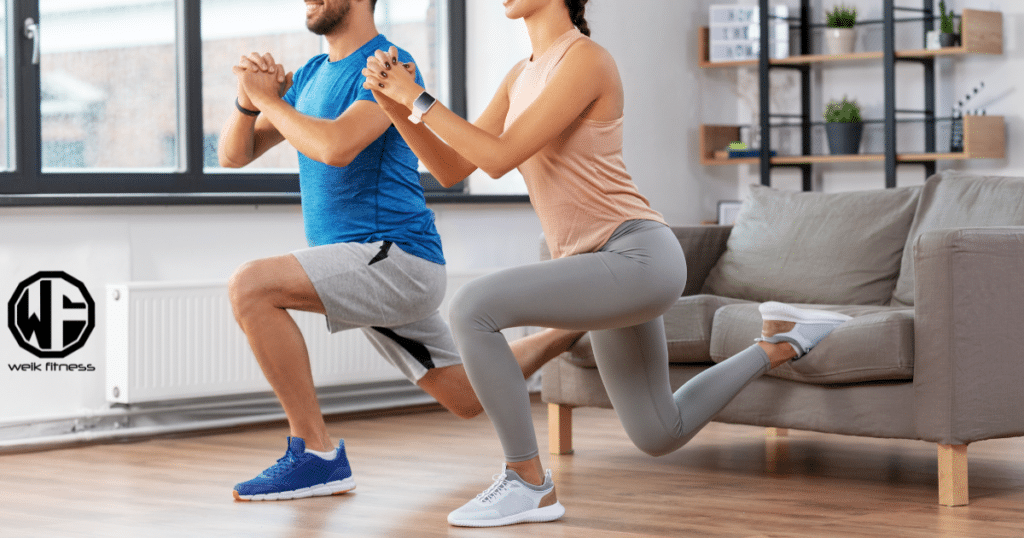
An uncomfortable side effect of getting in shape is the new attention one or both of you might receive. When your body changes for the better, you may notice more people looking your way. This can feel awkward for everyone and sometimes spark feelings of insecurity or jealousy.
Related Article: Want to Stay Fit? Then Skip Getting Married!
Jealousy can quickly harm a relationship if it’s not addressed. The goal of couples fitness is to strengthen your bond, not create division. Research has shown that insecurity in relationships can be heightened by perceived threats, and new attention can certainly feel like one.
Open communication is the only solution. If you feel uncomfortable, you need to talk about it. Usually, the other person simply needs reassurance that they are still your one and only. Explain that you feel happy and healthy because of the changes you’ve made together, and that their support is what helped you succeed.
Be Realistic and Have Fun with Couples Fitness

Ultimately, couples fitness is about having fun together. If it starts to feel like a chore or a competition, it’s time to re-evaluate. Sharing a passion for health can be an incredible bonding experience, but only if you both enjoy it.
Push each other, help change weights, and remember to laugh. A 2023 report from the Sports & Fitness Industry Association noted pickleball was the fastest-growing sport in America. Finding a fun, social activity like that can feel less like a workout and more like a date.
Other great options to explore together include:
- Ballroom dancing classes
- Partner yoga or acroyoga
- Rock climbing or bouldering
- Tandem kayaking or canoeing
Be realistic about your goals and what you want from this shared experience. When you focus on supporting each other, you can enjoy years of connection while reaping all the health benefits.
FAQs About Couples Fitness
What if we have very different fitness levels?
This is very common. The key is to find activities that can be modified for each person. For example, during a strength workout, you can each use different weights. When running or cycling, you can focus on time rather than distance. The fitter partner can also do more advanced variations of exercises while the other does the basic version.
How can we stay motivated together?
Set a shared goal that isn’t related to aesthetics. This could be completing a 5K race together, planning an active vacation that requires a certain level of fitness, or mastering a new skill like salsa dancing. Having a tangible, fun target to work towards can keep you both engaged.
What should we do if one person wants to quit?
Have an honest conversation about why. Is the current routine boring? Is it causing too much friction? Is there a fear of not keeping up? Often, the issue isn’t the idea of couples fitness itself, but the specific activity. Be open to trying something completely different. If your partner truly prefers to exercise alone, respect that choice and find other ways to connect and support each other’s health goals.


*Disclosure: This article may contain affiliate links or ads, which means we earn a small commission at no extra cost to you if you make a purchase through these links. These commissions help support the operation and maintenance of our website, allowing us to continue producing free valuable content. Your support is genuinely appreciated, whether you choose to use our links or not. Thank you for being a part of our community and enjoying our content.
PLEASE CONSIDER SHARING THIS ON YOUR SOCIAL MEDIA TO HELP OTHERS LEARN MORE ABOUT THIS TOPIC.