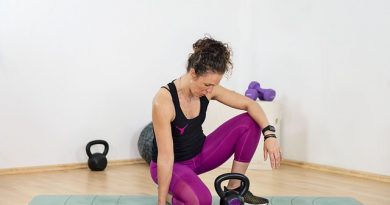


6 Ways to Protect and Strengthen Your Lower Back
Your lower back is the literal foundation of your body and for that reason, you should do everything possible to strengthen your lower back. It works incredibly hard every single day, supporting your weight as you sit, stand, and walk. It absorbs a massive amount of pressure when you bend, twist, and lift.
For that reason alone, learning how to protect and strengthen your lower back is one of the most important things you can do for your long-term health and mobility.
In my experience as a certified strength and conditioning coach, I’ve seen that building resilient lower back muscles is the key to managing daily stress. This guide will show you six proven ways to do just that.
Disclaimer: This article is for informational purposes only and is not meant to treat or diagnose any condition. It is recommended that you speak with your doctor before starting any exercise program, changing your daily nutrition, or adding any supplements to your regimen.
Table of contents
Key Takeaways
- Core Stability is Crucial: Exercises like the Bird-Dog and Drawing-In Maneuver are vital for activating deep core muscles, such as the transverse abdominis, which acts as a natural corset for your spine.
- Glute Strength is Back Support: The Bridge exercise primarily targets the gluteus maximus. Strong glutes take a significant amount of strain off the lower back during daily movements.
- Proper Form Over Everything: For complex lifts like the Deadlift, maintaining a neutral spine is non-negotiable to prevent injury. The American Council on Exercise (ACE) emphasizes this as a foundational principle for safe lifting.
- Consistency Beats Intensity: Gentle, consistent exercises like Pelvic Tilts and Supermans can be more effective for long-term back health than infrequent, intense workouts. They improve mobility and blood flow, aiding in recovery.
6 Exercises to Protect and Strengthen Your Lower Back
Consistent exercise is one of the most effective ways to manage and prevent lower back pain. According to studies, physical activity boosts blood flow to your lower back. This increased circulation can significantly reduce stiffness and speed up the natural healing process.
There are many exercises for the lower back you can perform right in the comfort of your home, with no expensive gym membership required.
Here are six foundational exercises you should focus on to build a stronger, more resilient back.
1. Bridges
Bridges are a fantastic exercise because they primarily strengthen the gluteus maximus, the largest muscle in your buttocks. When your glutes are strong, they handle a lot of the work that your lower back might otherwise be forced to do, which is key for keeping your spine stable and pain-free.
Pro-Tip: A common mistake is arching the lower back too much. Focus on squeezing your glutes to lift your hips. This ensures the glutes do the work, not your spine. Many trainers on platforms like YouTube emphasize keeping your ribs down to maintain a neutral core.
How to perform this exercise:
- Lie on your back with your knees bent and feet flat on the floor, about hip-width apart.
- Engage your core and glutes to lift your hips off the floor until your body forms a straight line from your shoulders to your knees.
- Keep your shoulders pressed firmly into the ground and hold this position for 15-30 seconds before slowly lowering back down.
2. Drawing-In Maneuver
The drawing-in maneuver is an isometric exercise that targets the transverse abdominis. Think of this muscle as your body’s natural weightlifting belt. Activating it properly provides stability and can help relieve sciatic pain by decompressing the spine.
How to perform this exercise:
- Lie on your back with your knees bent and feet flat, keeping your spine in a neutral, relaxed position.
- Gently pull your belly button in towards your spine, as if you are trying to zip up a tight pair of pants. You should feel the muscles around your abdomen tighten.
- Hold this contraction for 5-10 seconds while breathing normally. It is critical that you don’t hold your breath.
- Relax and repeat the movement 8-12 times.
3. Deadlifts
When performed correctly, Deadlifts are one of the best exercises to strengthen your entire posterior chain, including the glutes, hamstrings, and the erector spinae muscles of your lower back. This helps improve posture and increases bone density.
A 2015 study published in the Journal of Strength and Conditioning Research found that a supervised 16-week deadlift program significantly reduced pain and improved mobility in participants with chronic lower back pain.
How to perform this exercise:
- Stand with your feet hip-width apart, with the middle of your feet under a barbell.
- Hinge at your hips and bend your knees to grab the bar with a shoulder-width grip. Dumbbells are also a great option.
- Keeping your spine perfectly straight, drive through your heels and pull the bar up along your shins until you are standing tall.
- Squeeze your glutes at the top. Do not lean back.
- Slowly lower the weight back down by reversing the motion, maintaining control the entire time.

4. Superman
The Superman is an excellent bodyweight exercise for isolating and strengthening the erector spinae muscles, which run along your spine and are critical for good posture. The best part is that you can do it anywhere without any equipment at all.
Many physical therapists, including those at the Cleveland Clinic, recommend this exercise for its low-impact nature and effectiveness in building back endurance.
How to perform this exercise:
- Lie on your stomach with your arms and legs extended, like you’re flying.
- Engage your lower back and glutes to simultaneously lift your arms, chest, and legs off the floor. Keep your neck in a neutral position by looking at the floor in front of you.
- Hold the peak position for 2-3 seconds.
- Slowly lower back to the starting position. Aim for 3 sets of 10-12 repetitions.
5. Pelvic Tilts
Pelvic tilts are a subtle but powerful exercise for activating deep core muscles and improving spinal mobility. This movement helps release tension in the lower back and strengthens the abdominal muscles that provide support from the front.
How to perform this exercise:
- Lie on your back with your knees bent and feet flat on the floor. Your lower back will likely have a small, natural curve away from the floor.
- Gently tighten your abdominal muscles to press your lower back flat against the floor, “tilting” your pelvis upward slightly.
- Hold this flattened position for about 5 seconds, then slowly relax back to the starting position.
- You can repeat this movement 10-15 times. It’s gentle enough to do throughout the day, even while standing or sitting at your desk.
6. Bird-Dog
The bird-dog is a fantastic exercise for promoting stability across your entire core. It challenges your balance and coordination, forcing the muscles in your lower back, hips, and abdomen to work together to keep your spine straight and stable. The American Council on Exercise (ACE) champions this move for its ability to improve proprioception, which is your body’s awareness of its position in space.
Insider Tip: The biggest mistake people make is rushing the movement. The benefit comes from moving slowly and with control, preventing your hips from rocking side to side. Imagine you have a glass of water on your lower back that you don’t want to spill.
How to perform this exercise:
- Start on all fours, with your hands directly under your shoulders and your knees under your hips.
- Keeping your back flat, simultaneously extend your right arm straight forward and your left leg straight back.
- Hold for a moment, focusing on keeping your core tight and your hips level with the floor.
- Slowly return to the starting position and repeat on the other side. That’s one rep. Aim for 10 reps per side.
FAQs About How to Strengthen Your Lower Back
How often should I do these exercises to strengthen my lower back?
For best results, aim to incorporate these exercises into your routine 2-3 times per week on non-consecutive days. Consistency is more important than intensity. Even 15-20 minutes per session can make a significant difference over time.
Can I do these exercises if I currently have back pain?
If you have acute or severe back pain, it is essential to consult with a doctor or physical therapist before starting any new exercise program. For mild stiffness or discomfort, gentle exercises like Pelvic Tilts and the Drawing-In Maneuver can often provide relief. Always listen to your body and stop if you feel any sharp pain.
What is the single most important muscle to strengthen for lower back health?
While the entire core is important, many experts, including Dr. Stuart McGill, a leading back pain researcher, point to the gluteus maximus as a critical muscle. Strong glutes provide power for lifting and movement, taking the load off the smaller, more vulnerable muscles of the lower back.


*Disclosure: This article may contain affiliate links or ads, which means we earn a small commission at no extra cost to you if you make a purchase through these links. These commissions help support the operation and maintenance of our website, allowing us to continue producing free valuable content. Your support is genuinely appreciated, whether you choose to use our links or not. Thank you for being a part of our community and enjoying our content.
PLEASE CONSIDER SHARING THIS ON YOUR SOCIAL MEDIA TO HELP OTHERS LEARN MORE ABOUT THIS TOPIC.