
Shoulder Building 101: Time to Cap Those Shoulders
If you’re looking to build an impressive, powerful-looking physique, it all starts with shoulder building. Creating broad, “boulder” shoulders is the key to achieving the V-taper that makes your waist look smaller and your frame appear more athletic.
But building truly three-dimensional delts isn’t just about endless overhead presses.
As a certified strength coach and personal trainer, I’ve seen countless people get this wrong. They focus on one or two movements and neglect the smaller, stabilizing muscles, which not only limits growth but also opens the door to injury. In fact, research shows that a staggering 33.8% of all weightlifting injuries happen at the shoulder, making it the most vulnerable joint in the weight room.
This guide will break down the simple anatomy, the most effective exercises for each part of the muscle, and give you the clear, actionable programs you need for serious shoulder building.
Disclaimer: This article is for informational purposes only and is not meant to treat or diagnose any condition. It is recommended that you speak with your doctor before starting any exercise program, changing your daily nutrition, or adding any supplements to your regimen.
Table of contents
Key Takeaways
- Train All Three Heads: For a complete, 3D look, you must train the anterior (front), middle (lateral), and posterior (rear) deltoids. Many lifters overwork the front and neglect the others.
- Prioritize Form Over Weight: The shoulder is a delicate joint. Using controlled movements and a full range of motion is more effective and safer than lifting heavy with bad form.
- Progressive Overload is Key: To keep building muscle, you must consistently challenge your shoulders by gradually increasing the weight, reps, or sets over time.
- Frequency Matters: For most people, training shoulders two to three times per week provides the best balance of stimulus and recovery for muscle growth.

Let’s Discuss the Anatomy of the Shoulder
Your shoulder is the most mobile joint in your entire body, but this mobility comes at the cost of stability. The joint is a ball-and-socket, where the “ball” is the head of your humerus (upper arm bone) and the “socket” is the glenoid cavity of your scapula.
Surrounding this joint are critical structures like the acromion, where bone spurs can form, and the acromioclavicular (AC) joint, a common spot for separations. This complex structure allows for an incredible range of motion, but it’s held together by a group of muscles you need to understand.
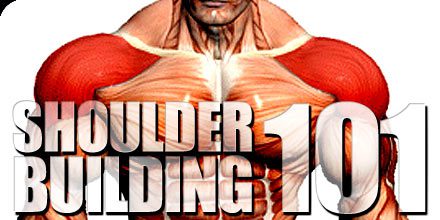
The “cap” of your shoulder is made of three distinct muscles, or “heads,” known collectively as the deltoid. We’ll cover these in a moment. But first, it’s crucial to acknowledge the engine room of the shoulder: the rotator cuff.
RELATED: The Best Shoulder Cable Workouts & Cable Shoulder Exercises
Rotator Cuff
The rotator cuff is not one muscle, but a group of four that provides stability to the entire shoulder joint: the supraspinatus, infraspinatus, teres minor, and subscapularis. These muscles are responsible for “cuffing” the head of the humerus in the socket, controlling all rotational movements, and protecting you from injury. A weak or injured rotator cuff is often the root cause of shoulder pain, making it vital to warm up properly and avoid movements that cause pinching or discomfort.
Different Parts Of The Delts
To achieve that round, “boulder shoulder” look, you must train all three heads of the deltoid. Neglecting even one can lead to an imbalanced look and potential injury down the road.
Anterior Deltoid
This is your front delt. It runs from your clavicle to your humerus and is the primary mover in lifting your arm forward. It gets a lot of work from chest pressing movements, so it’s often the most overdeveloped of the three heads. The dumbbell shoulder press has been shown in American Council on Exercise (ACE) research to elicit the highest muscle activation for the anterior deltoid.
Middle Deltoid
Also known as the lateral deltoid, this is the key to creating shoulder width. This head sits on the side of the shoulder and is responsible for lifting your arm out to the side (abduction). If you want that V-taper, this is the muscle you need to focus on. Exercises like the bent-arm lateral raise are incredibly effective at isolating this part of the muscle.
Posterior Deltoid
Your rear delts are on the back of your shoulder and are crucial for posture, stability, and creating a thick, well-rounded look from the side and back. They help pull your arms backward. Since we spend so much time pushing things and sitting with hunched shoulders, the posterior deltoid is often weak and underdeveloped. ACE-sponsored research found that the seated rear lateral raise and the 45-degree incline row are fantastic for activating this often-neglected muscle.
Different Shoulder Exercises
The best shoulder building program uses a mix of compound lifts for overall mass and isolation exercises to target each specific head. Here are some of the most effective movements you can use.
Compound Lifts (Overall Mass)
- Barbell or Dumbbell Shoulder Press: The king of shoulder exercises. It builds raw strength and hits all three heads, with an emphasis on the front and middle delts.
- Arnold Presses: Named after Arnold Schwarzenegger, this exercise involves rotation that hits the delts through a greater range of motion, providing excellent stimulus for the front and middle heads.
- Push Press: An explosive overhead press that uses momentum from your legs, allowing you to handle heavier weight to build power and overall shoulder mass.
Isolation Exercises (Targeted Growth)
- Front Raises (Barbell, Dumbbell, or Cable): Directly isolates the anterior deltoid. Use a controlled tempo and avoid using momentum.
- Lateral Raises (Dumbbell or Cable): The number one exercise for building shoulder width by targeting the middle deltoid. A pro-tip from my years of training is to lead with your elbows, keeping them slightly higher than your wrists to maximize tension on the muscle.
- Bent-Over Lateral Raises / Reverse Flyes: A crucial move to isolate the posterior deltoids, improving your posture and giving your shoulders a 3D look.
- Upright Rows (Wide Grip): This exercise can be controversial, as a narrow grip can cause shoulder impingement for some people. However, using a wider grip where you pull the bar to your chest can be an effective way to hit the middle delts and traps safely.
Mass Building Shoulder Workouts
Here are five different shoulder building workouts you can rotate to keep your muscles guessing and growing. For each workout, focus on progressive overload. That means each week, you should aim to add a little weight or do one more rep than last time. That is the secret to continuous growth.
Pro-Tip: For hypertrophy (muscle growth), rest for 60-90 seconds between sets on isolation moves and up to 2 minutes on heavy compound presses. This allows for enough recovery to perform quality reps.
Workout 1: Dumbbell Focus
- Dumbbell Shoulder Press: 3 sets of 8-12 reps
- Dumbbell Lateral Raises: 4 sets of 10-15 reps
- Bent-Over Dumbbell Raises: 4 sets of 12-15 reps
- Dumbbell Front Raises: 3 sets of 10-12 reps
Workout 2: Barbell & Cable Power
- Military Press (Standing Barbell): 3 sets of 6-10 reps
- Cable Lateral Raises: 3 sets of 12-15 reps
- Cable Rear-Delt Reverse Fly (Face Pulls): 3 sets of 12-15 reps
- Barbell Front Raises: 3 sets of 10-12 reps
Workout 3: All Angles Attack
- Arnold Presses: 3 sets of 8-12 reps
- Wide-Grip Barbell Upright Rows: 3 sets of 10-12 reps
- Bent-Over Dumbbell Raises: 3 sets of 12-15 reps
- Cable Front Raises: 3 sets of 12-15 reps
Workout 4: Strength & Hypertrophy
- Dumbbell Shoulder Press: 4 sets of 6-8 reps
- Cable Lateral Raises: 4 sets of 15-20 reps
- Cable Rear-Delt Reverse Fly: 4 sets of 15-20 reps
- Barbell Front Raises: 3 sets of 8-12 reps
Workout 5: Machine & Cable Pump
- Smith Machine Shoulder Press: 3 sets of 8-12 reps
- Leaning Cable Lateral Raises (Single Arm): 3 sets of 12-15 reps per side
- Reverse Pec-Deck Machine: 3 sets of 12-15 reps
- Cable Front Raises (with Rope): 3 sets of 12-15 reps
Key Principles for Shoulder Building Success
You can have the perfect program, but without the right principles, your results will stall. Focus on these fundamentals.
Master the Mind-Muscle Connection
Shoulder training isn’t about moving weight from point A to point B. It’s about feeling the target muscle do the work. A 2018 study by renowned hypertrophy researcher Brad Schoenfeld, PhD, found that focusing on “squeezing” the muscle can significantly increase muscle growth. For isolation movements, use lighter weights and truly concentrate on the contraction in your delt, not just swinging the dumbbell.
Prioritize Progressive Overload
This is the most critical principle in bodybuilding. To grow, your muscles must adapt to a stress they haven’t experienced before. Track your workouts. If you did 8 reps with 50-pound dumbbells on your shoulder press last week, your goal this week is to hit 9 reps or move up to 55-pound dumbbells. This simple act of trying to beat your previous performance is what forces muscles to get bigger and stronger.
Most of all, have fun with your shoulder building workouts. If you aren’t enjoying the process, you won’t stick with it long enough to see the results you want.
FAQs About Should Building
How often should I train shoulders for mass?
For most lifters, training shoulders two to three times per week is the sweet spot for muscle growth. This frequency allows you to stimulate protein synthesis multiple times a week without overtraining the delicate shoulder joint. A total weekly volume of 10-20 hard sets, spread across your sessions, is a great target.
How long does it take to build bigger shoulders?
With consistent training and proper nutrition, most people will start to see noticeable changes in their shoulder size and definition within 3 to 6 months. However, genetics, training intensity, and diet all play a significant role. Building impressive “boulder shoulders” is a marathon, not a sprint.
Can I do upright rows safely?
Upright rows are a topic of debate. The main concern is that a narrow grip can cause internal rotation that leads to shoulder impingement, where tendons get pinched. However, many people can perform them safely, especially by using a wider grip (outside shoulder-width) and not pulling the bar higher than the chest. If you feel any pain, it is best to choose an alternative exercise like a lateral raise.
Do I need to train my rotator cuff directly?
While you don’t need a full workout dedicated to it, including some light rotator cuff exercises as part of your warm-up is a fantastic way to prevent injury. Simple movements with a resistance band, like external and internal rotations, can help stabilize the shoulder joint before you start your heavy pressing movements.


*Disclosure: This article may contain affiliate links or ads, which means we earn a small commission at no extra cost to you if you make a purchase through these links. These commissions help support the operation and maintenance of our website, allowing us to continue producing free valuable content. Your support is genuinely appreciated, whether you choose to use our links or not. Thank you for being a part of our community and enjoying our content.
PLEASE CONSIDER SHARING THIS ON YOUR SOCIAL MEDIA TO HELP OTHERS LEARN MORE ABOUT THIS TOPIC.