
The Bodybuilding Movement: The State of the Industry
How do you feel about the bodybuilding movement today? As a certified strength and conditioning coach and sports nutritionist with a couple of decades in this industry, I have my own perspective, but I’m definitely not the only one watching things evolve.
The fitness world is booming, and bodybuilding is changing right along with it. This isn’t your parents’ bodybuilding anymore; the sport is transforming.
With an explosion of different divisions in federations like the NPC and IFBB Pro League, the competitive stage has more to offer than ever. From the mass monsters of the Open class to the beach-ready look of Men’s Physique, there’s a category for nearly every type of physique. This guide will break down what this modern bodybuilding movement looks like and what it means for the future of the sport.
RELATED: Are Natural Bodybuilding Competitions Dying Out in America?
Disclaimer: This article is for informational purposes only and is not meant to treat or diagnose any condition. It is recommended that you speak with your doctor before starting any exercise program, changing your daily nutrition, or adding any supplements to your regimen.
Table of contents
Key Takeaways
- The bodybuilding movement has expanded significantly, with multiple divisions like Open, 212, Classic Physique, and Men’s Physique catering to different body types and aesthetic goals.
- The Men’s Open division remains the main attraction, featuring the largest athletes and offering the biggest prize purses, with the Mr. Olympia winner taking home hundreds of thousands of dollars.
- Classic Physique has exploded in popularity, largely thanks to dominant champion Chris Bumstead, as it brings back the “golden era” aesthetics favored by legends like Arnold Schwarzenegger.
- While Men’s Physique has high participation numbers, it is often criticized for its less muscular standard and for competitors wearing board shorts that hide their leg development.
- The future of bodybuilding is not about a single look but a collection of specialized aesthetics, with prize money and sponsorships increasingly influenced by an athlete’s social media presence as much as their stage placings.

Bodybuilding Movement Through Various Divisions
To really understand the modern bodybuilding movement, you need to look at the distinct divisions that make up a professional show.
Bodybuilding (open)
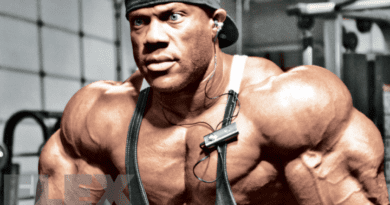
The Men’s Open is the heart of the bodybuilding movement and features the largest athletes on the planet. These are the “mass freaks” you see in the magazines, and this division remains the sport’s biggest attraction. There are no weight limits here, so the goal is maximum muscle mass, density, and conditioning.
This is where the biggest names and paychecks in the sport reside. For instance, the 2023 Mr. Olympia winner, Derek Lunsford, took home a prize of $400,000. The most recent 2024 Mr. Olympia champion, Samson Dauda, earned an even bigger purse of $600,000. With names like Lunsford, Dauda, and former champion Hadi Choopan battling it out, the top of this division is incredibly competitive.
RELATED: Bodybuilding History — How the Sport Started & Evolved
While not everyone aspires to look like these competitors, you can’t deny the entertainment value. Watching someone whose flexed bicep is bigger than your head is part of the “freak show” appeal that puts fans in the seats for every era of bodybuilding.
212 Division
A division that, in my opinion, doesn’t get nearly enough credit is the 212 class. These competitors are pound-for-pound some of the most conditioned and muscular athletes in the entire sport. The key rule is that they must weigh in at or below 212 pounds.
The talent here is incredible. You have recent champions like Keone Pearson, who won the 212 Olympia title, and Shaun Clarida, a former champion who consistently brings a top-tier package. These athletes carry a shocking amount of muscle on smaller frames, creating a dense and powerful look. Many of them were former Open competitors, proving the level of quality in this division.
Classic Physique
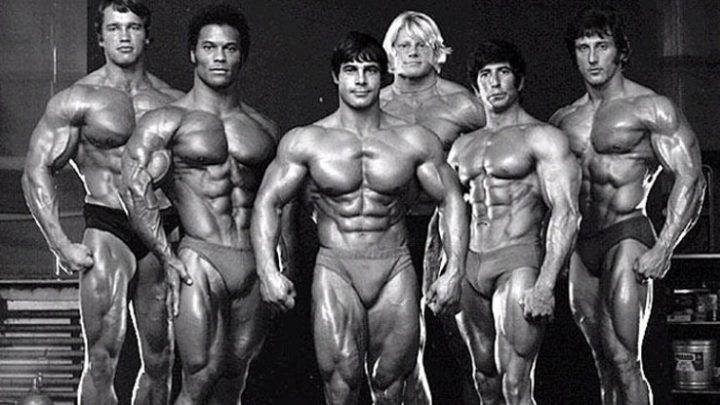
This is the fastest-growing and arguably most popular division in the bodybuilding movement right now. Classic Physique was created to bring back the “golden era” aesthetics of the 70s, focusing on symmetry, proportion, and a narrow waist, rather than just sheer mass. Even the legend Arnold Schwarzenegger has praised the division, stating it represents where the sport of bodybuilding should be headed.
The division’s explosive growth is heavily linked to its reigning champion, Chris Bumstead. With over 20 million Instagram followers, “CBum” has become the face of modern bodybuilding, appealing to a massive audience beyond the hardcore fans. His dominance, with six consecutive Classic Physique Olympia titles, has defined the category.
To ensure the focus remains on aesthetics, the IFBB Pro League enforces strict height-to-weight limits. For example, a competitor standing over 5’10” but under 5’11” can weigh a maximum of 205 lbs. This prevents the “mass monster” look and keeps the physiques balanced and classic.
Men’s Physique
Men’s Physique was introduced in 2012 for those who wanted a more attainable “beach body” look without the extreme muscularity of other divisions. It has become one of the most popular divisions in terms of competitor numbers, but it’s also one of the most ridiculed by bodybuilding purists.
The main critique is that competitors wear board shorts, hiding their entire leg development. The judging criteria focuses heavily on the upper body’s V-taper, with an emphasis on broad shoulders and a small waist, but it discourages the extreme size and conditioning found in other classes. This has led to the common joke that Men’s Physique competitors don’t train legs.
Despite the criticism, the division has produced popular champions like Ryan Terry, who recently defended his Men’s Physique Olympia title. It serves as an accessible entry point for many into the world of physique competition.
With All These Divisions, Where Does That Leave Bodybuilding?
So, where does this leave the overall bodybuilding movement? It’s clear the Open division will always be the main event, the one that puts fans in seats. However, the energy and growth are undeniably shifting.
RELATED: The Future of Bodybuilding
The rise of Classic Physique is the biggest story. Its focus on aesthetics has captured the attention of both old-school fans and a new generation on social media. I see 212 and Classic Physique continuing to gain momentum and respect in the coming years.
Men’s Physique, on the other hand, seems to be at a crossroads. While competitor numbers at the amateur level are high because the look is more attainable, it struggles for respect from serious fans. We’re seeing many top Men’s Physique athletes transition to Classic Physique to build a more complete physique and gain more credibility.
Ultimately, the business of fitness is changing. A competitor’s income is no longer just about prize money. An athlete’s value is now heavily tied to their social media following and sponsorship potential. For example, a top pro like Chris Bumstead likely earns significantly more from his YouTube ad revenue and sponsorships than he does from his Olympia winnings. His prize for winning the 2024 Classic Physique Olympia was $60,000, while the Open winner took home $600,000, yet Bumstead is arguably the sport’s biggest star.
The bodybuilding movement isn’t shrinking, it’s diversifying. The eyeballs are just being spread across more divisions, each with its own stars and fanbase. It’s an exciting time for the sport, and I’m eager to see how these divisions continue to evolve and shape the future of what it means to be a bodybuilder.
FAQs About the Bodybuilding Movement
What is the difference between NPC and IFBB?
The National Physique Committee (NPC) is the largest amateur bodybuilding organization in the United States. To compete professionally, an athlete must first compete in NPC shows and win a national-level competition to earn their “pro card.” Once they have a pro card, they can compete in the International Federation of Bodybuilding and Fitness (IFBB) Pro League, which is the professional federation where athletes earn prize money.
How much do professional bodybuilders earn?
Earnings vary dramatically. The top prize at the Mr. Olympia can be $400,000 to $600,000. However, prize money at smaller pro shows is much lower. The most successful professionals earn the majority of their income from other sources, such as sponsorships with supplement and apparel companies, online coaching, and social media revenue. Top-tier pros with a large following can command six-figure sponsorship deals.
What is the most popular bodybuilding division?
In terms of fan engagement and media attention, Classic Physique is arguably the most popular division right now, thanks to its aesthetic focus and the massive following of its top athletes like Chris Bumstead. For competitor participation, especially at the amateur level, Men’s Physique and Bikini often have the highest number of entries because the physique standards are more accessible to a wider range of people.
Why do some people dislike the Men’s Physique division?
The main criticisms from bodybuilding purists are that the competitors wear board shorts, which hide their leg development, and that the division rewards less muscularity than traditional bodybuilding. It’s often seen as a “surfer body” look rather than a true bodybuilder’s physique, and the judging can feel more subjective to some observers.


*Disclosure: This article may contain affiliate links or ads, which means we earn a small commission at no extra cost to you if you make a purchase through these links. These commissions help support the operation and maintenance of our website, allowing us to continue producing free valuable content. Your support is genuinely appreciated, whether you choose to use our links or not. Thank you for being a part of our community and enjoying our content.
PLEASE CONSIDER SHARING THIS ON YOUR SOCIAL MEDIA TO HELP OTHERS LEARN MORE ABOUT THIS TOPIC.