
Tennis Elbow: A Bodybuilder’s Nightmare
If I told you bodybuilder’s are getting tennis elbow, you may think I’ve gone nuts. But it’s the truth and it needs to be talked about.
As a certified strength and conditioning coach, I’ve seen countless athletes deal with injuries. A few weeks ago, I thought I was dealing with a simple brachioradialis strain from my training, a topic I’ve written about before. It turns out I was wrong.
The real culprit was tennis elbow.
Now, despite playing competitive tennis through college, this injury had nothing to do with the sport. It all started with a sharp pain in my left arm during a set of reverse curls. I brushed it off as a minor pull, but the pain didn’t fade. This guide is here to break down what tennis elbow means for a bodybuilder and give you the strategies to manage it, so you don’t have to put your training on hold.
Disclaimer: This article is for informational purposes only and is not meant to treat or diagnose any condition. It is recommended that you speak with your doctor before starting any exercise program, changing your daily nutrition, or adding any supplements to your regimen.
Table of contents
Key Takeaways
- What It Is: Tennis elbow, or lateral epicondylitis, is an overuse injury of the forearm tendons, specifically the Extensor Carpi Radialis Brevis (ECRB), common in lifters from repetitive gripping.
- Common Causes for Lifters: High-risk exercises include reverse curls, upright rows, and pull-ups. An improper grip and muscle imbalances are major contributing factors.
- Effective Treatment: Over 90% of cases resolve without surgery. Treatment focuses on rest, specific physical therapy exercises like the Tyler Twist with a TheraBand FlexBar, and using a counterforce brace during activity.
- Prevention is Key: Strengthening smaller stabilizer muscles in the forearms and rotator cuffs is crucial. Balancing pressing and pulling movements helps prevent the muscle imbalances that lead to injury.
Tennis Elbow… AKA Lateral Epicondylitis
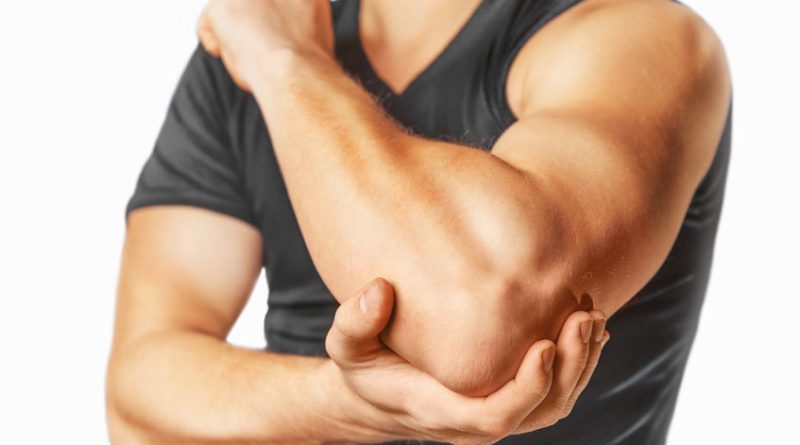
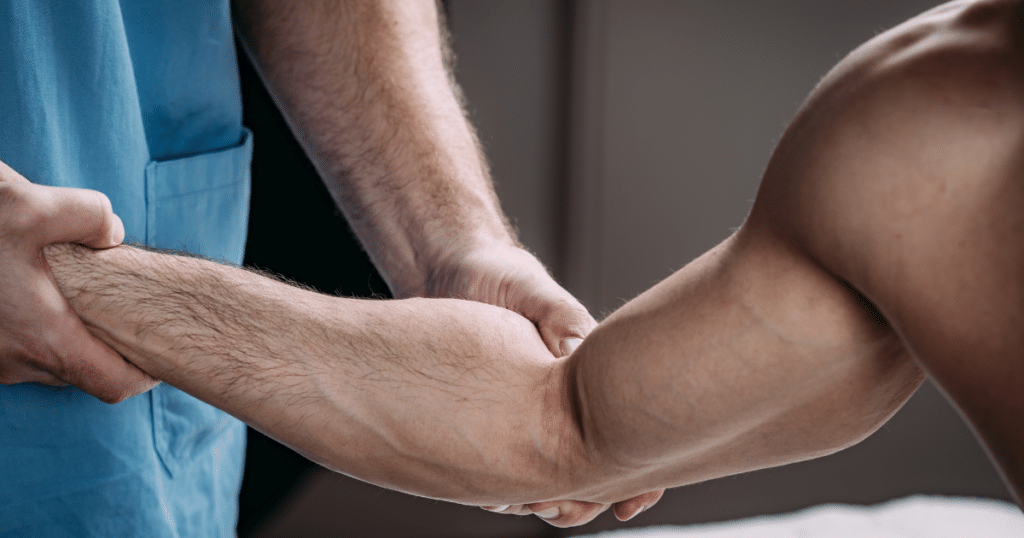
The medical term for tennis elbow is lateral epicondylitis. This condition happens when the small extensor muscles of your forearm, particularly a tendon called the Extensor Carpi Radialis Brevis (ECRB), become inflamed and develop tiny tears. This damage occurs where the tendon attaches to the bony bump on your outer elbow becomes irritated.
For bodybuilders, this is often caused by overuse from repetitive gripping, trauma from lifting too heavy too soon, or an imbalance where forearm flexors overpower the extensors. In my case, I jumped into reverse curls with too much weight after a long break, which was a classic mistake.
You might be tempted to push through what feels like simple tendonitis, but I strongly advise against it. The pain can become so intense that even clenching your fist without weight is excruciating. Many elite athletes and dedicated bodybuilders have had their training derailed by lateral epicondylitis, proving it’s not just an issue for tennis players.
Initially, you may only feel soreness, easily mistaken for DOMS (delayed onset muscle soreness). You might think it is just standard muscle soreness. However, you’ll soon realize that simple daily tasks like picking up a coffee mug or turning a doorknob send a sharp pain from your elbow down your forearm. That’s the tell-tale sign that this is something more serious than routine soreness.
What is Tennis Elbow?
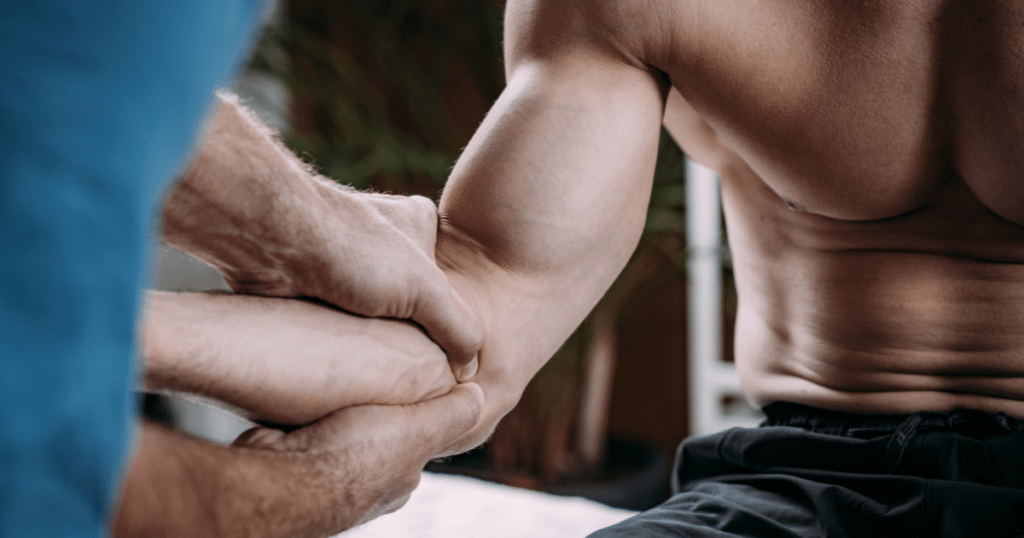
Tennis elbow is a repetitive strain injury affecting the tendons on the outside of your elbow. While the name comes from tennis, the condition is very common among anyone who repeatedly grips, twists, and lifts, which perfectly describes bodybuilding and weight training.
It develops from overuse, leading to micro-tears in the tendons that connect your forearm muscles to the lateral epicondyle, a small bone on the outside of your elbow. For lifters, this often happens during exercises that put a lot of stress on the wrist extensors.
Common symptoms of tennis elbow include:
- Sharp or burning pain on the outer part of your elbow.
- A weak grip that makes holding onto dumbbells or barbells difficult.
- Pain that flares up when gripping objects, shaking someone’s hand, or even opening a jar.
- Stiffness in the elbow, especially in the morning.
Treating tennis elbow typically starts with the R.I.C.E. method, which stands for Rest, Ice, Compression, and Elevation. Physical therapy exercises are also critical for strengthening the forearm muscles and improving flexibility to prevent recurrence.
If these conservative treatments don’t work, a doctor may suggest other options. These can include corticosteroid injections or wearing an orthotic like a counterforce brace. In very rare and severe cases, surgery might be considered to repair the damaged tendon.
RELATED: The Worst Fitness Injuries, And What To Do About Them
Prevention involves mastering proper form, warming up correctly, and avoiding sudden, dramatic increases in weight or volume. If you feel elbow pain, it’s best to see a medical professional for a clear diagnosis and a recovery plan tailored to you.
Is Tennis Elbow Treatable?
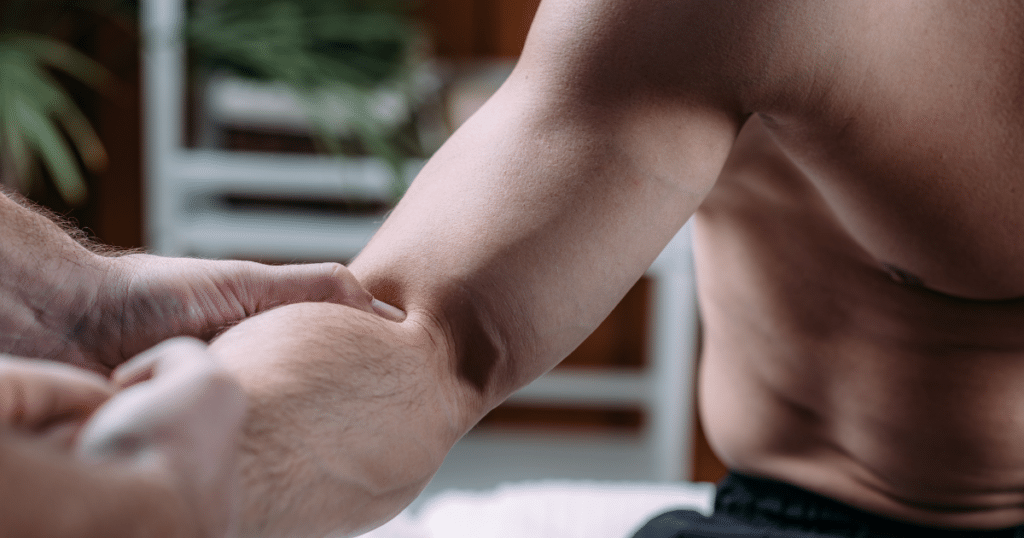
The good news is that yes, tennis elbow is highly treatable. The Cleveland Clinic reports that over 90% of patients fully recover without needing surgery. However, your recovery depends entirely on how severe the injury is and your commitment to a smart treatment plan.
Your first step should always be to get a proper diagnosis from a doctor or physical therapist. From there, you’ll likely explore a few options.
Conservative and At-Home Treatments
For most lifters, surgery is an absolute last resort. Instead, focus on non-invasive methods that fix the root cause.
- Rest and Modification: The first step is to stop doing the exercises that cause pain. Upright rows and reverse curls are notorious culprits. If any movement hurts, stop it immediately.
- Stretching: Your physical therapist will likely prescribe specific stretches, like wrist extensor and flexor stretches. I recommend performing these gently about five times a day, never pushing into sharp pain.
- Strengthening Exercises: A highly effective tool I recommend to my clients is the TheraBand FlexBar. Performing an exercise called the “Tyler Twist” with this bar has been shown in studies to be very effective for rehabilitating the damaged tendon. You’ll also be given exercises to strengthen the wrist extensors, usually with very light weights.
- Supportive Gear: Wearing a counterforce brace or a tennis elbow strap can be very helpful. You can find these on Amazon or at stores like Dick’s Sporting Goods. These devices work by applying pressure just below the elbow, which helps reduce tension on the inflamed tendon.

Medical Interventions
If at-home care isn’t enough, your doctor might suggest other options, though they come with trade-offs. Cortisone injections are one such method. A steroid is injected into the area to reduce inflammation, offering temporary relief. However, this is just a bandage. Many people report the pain returning worse than before after about six months. More importantly, research has shown that repeated cortisone shots can weaken tendons over time, increasing the risk of a more severe injury down the road.
Surgery is the final option, reserved for the most persistent cases where other treatments have failed for 6 to 12 months. Many surgeons are hesitant to perform it due to potential complications like loss of range of motion.
When you do return to lifting, check your ego at the door. Start with lighter weights and focus intensely on proper form. Progress slowly to avoid re-injury.
Train Smaller Muscles to Prevent Injuries
As bodybuilders, we love training the big mirror muscles, but neglecting the small stabilizer muscles is a direct path to injuries like tennis elbow and rotator cuff tears. Muscle balance is not just a buzzword; it’s essential for longevity in the gym.
If I asked a room of lifters how many directly train their rotator cuffs or forearm extensors, only a few hands would go up. This is a huge problem. These small muscles provide the stability needed to perform heavy lifts safely. When they are weak, the stress gets transferred to your tendons and ligaments, leading to injury.
A pro-tip I always share with clients is to dedicate time to “prehab” work. Don’t wait until you’re injured to start caring about the small muscles.
Incorporate these exercises into your routine:
- Wrist Extensions: Sit on a bench with a light dumbbell (2-5 pounds) and rest your forearm on your thigh, palm down. Slowly extend your wrist upwards, then lower it back down. Aim for 2-3 sets of 15-20 reps.
- External Rotations: Anchor a light resistance band to a post at elbow height. Grab the band, keep your elbow tucked into your side at a 90-degree angle, and rotate your forearm outward. This is crucial for shoulder health and stability.
Don’t lose sight of the big picture. Training these smaller accessory and stabilizing muscles is the key to staying healthy, lifting heavy, and achieving long-term progress.
FAQs About Tennis Elbow
Can I still lift weights with tennis elbow?
You will need to modify your routine significantly. Avoid any exercise that causes pain, which often includes movements involving a strong grip, like deadlifts, rows, and curls. You may be able to focus on lower body exercises or machine work that doesn’t strain your grip. It is best to take some time off from heavy lifting to allow the tendon to heal.
How long does it take for tennis elbow to heal for a bodybuilder?
Recovery time varies widely. Minor cases can improve in a few weeks with proper rest and care. More severe cases can take anywhere from three months to over a year to fully resolve. Consistency with physical therapy exercises is the most important factor in speeding up your recovery.
Is tennis elbow the same as golfer’s elbow?
No, they are different conditions. Tennis elbow (lateral epicondylitis) causes pain on the outside of the elbow. Golfer’s elbow (medial epicondylitis) causes pain on the inside of the elbow. Both are caused by overuse of the forearm muscles, but they affect different tendons.
What kind of grip should I use to avoid tennis elbow?
Avoid a “death grip” on the bar. Try using a wider grip on some exercises or using tools like Fat Gripz to distribute the load more evenly across your hands and forearms. For pulling movements, a neutral grip (palms facing each other) is often less stressful on the elbow joint than a pronated (overhand) or supinated (underhand) grip.


*Disclosure: This article may contain affiliate links or ads, which means we earn a small commission at no extra cost to you if you make a purchase through these links. These commissions help support the operation and maintenance of our website, allowing us to continue producing free valuable content. Your support is genuinely appreciated, whether you choose to use our links or not. Thank you for being a part of our community and enjoying our content.
PLEASE CONSIDER SHARING THIS ON YOUR SOCIAL MEDIA TO HELP OTHERS LEARN MORE ABOUT THIS TOPIC.