
Smart Cups in the Energy Drink Category?
You see a product online and think, is that for real? That’s what happened when a friend mentioned “Smart Cups,” a wild concept where an empty cup magically transforms into a zero-calorie energy drink with just water. My first thought was sorcery, but my second was pure curiosity.
This isn’t just another gimmick in the massive global energy drink market, an industry expected to soar past $197 billion by 2035. It’s a technology trying to change how we think about beverages entirely.
As a certified sports nutritionist with over two decades in the fitness and supplement world, I’ve seen countless “game-changing” products. My job is to cut through the hype. So, I dug into Smart Cups to figure out if this is a genuine innovation or just a clever trick in a cup.
Disclaimer: This article is for informational purposes only and is not meant to treat or diagnose any condition. It is recommended that you speak with your doctor before starting any exercise program, changing your daily nutrition, or adding any supplements to your regimen.
Table of contents
Key Takeaways
- Smart Cups are biodegradable cups with 3D-printed ingredients on the bottom that dissolve in water to create a zero-sugar, low-calorie energy drink.
- Each cup contains about 125 mg of caffeine, comparable to a strong cup of coffee, along with B vitamins and the amino acid L-Arginine.
- The main selling points are sustainability and portability, aiming to reduce the carbon footprint from shipping heavy liquids.
- However, the practical convenience is debatable, as you need to carry the cup and find a water source, unlike a pre-packaged, chilled can from a store.
What Are Smart Cups and How Do They Work?
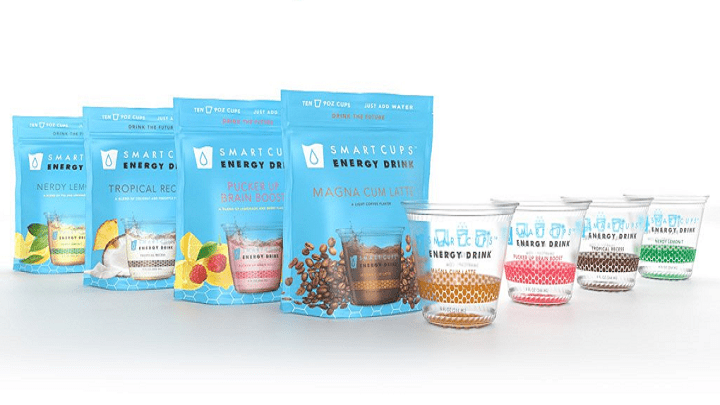
At its core, a Smart Cup is a beverage delivery system. The company, founded by Chris Kanik, uses a proprietary 3D-printing technology to infuse micro-encapsulated ingredients directly onto the bottom of a cup. When you add water, these printed layers activate and dissolve, turning plain water into an energy drink in about a minute.
The cups themselves are made from a plant-based, eco-friendly bioplastic that is biodegradable, addressing a major environmental concern with single-use packaging. The technology is designed to eliminate the need to ship liquid, which drastically reduces transportation weight and carbon emissions.
From a nutritional standpoint, the specs are impressive for the health-conscious consumer.
- Zero Sugar & Low Calorie: Most flavors contain only five calories and 1 gram of carbs.
- Caffeine Content: Each 9-ounce cup delivers 125 mg of caffeine.
- Added Nutrients: They are fortified with B vitamins and L-Arginine to support energy and focus.
Smart Cups vs. Traditional Energy Drinks
The energy drink market has long been dominated by the convenience of a chilled can. Consumers grab a Monster or Red Bull from a gas station for an instant boost. Smart Cups challenges this model by prioritizing portability and sustainability over immediate, ready-to-drink access.
Here’s a direct comparison to help you see the difference.
| Feature | Smart Cups | Monster Energy (16 oz) | Red Bull (8.4 oz) |
|---|---|---|---|
| Caffeine | 125 mg | ~160 mg | ~80 mg |
| Calories | 5 | ~210 | ~110 |
| Sugar | 0 g | ~54 g | ~27 g |
| Cost Per Serving | ~$1.80 – $2.40 (plus shipping) | ~$2.50 – $3.00 | ~$2.00 – $2.50 |
While Smart Cups wins on the nutrition front with zero sugar and minimal calories, the cost can be comparable to, or even higher than, traditional energy drinks once you factor in shipping for the 3D-polycapsule biodegradable cup.
The Big Question: Are They Actually Convenient?
This is where the concept gets tricky. The company claims the cups are more convenient to travel with than heavy cans. But this creates a two-step process: you have to carry an empty cup and then find a water source, like a fountain or sink.
If you’re near a sink, you’re likely also near a refrigerator where you could store a traditional energy drink. More importantly, energy drinks from a cooler are ice-cold, while tap water is often lukewarm. For many people, a cold, refreshing beverage is a key part of the experience.
User Feedback: Some Reddit users have pointed out that the flavor can taste watery if you don’t use the correct amount of water. Another common critique is the lack of a lid, which makes it difficult to use in a car or on the move without spilling.
The product seems best suited for specific situations, like air travel where carrying liquids is restricted, or for backpackers who want to minimize weight.
Beyond Energy Drinks: The Future of Smart Cups Technology
While the initial launch focuses on energy drinks, the company has much bigger plans. The underlying printing technology is the real innovation, and they are already exploring expansions into other categories.
Future product lines could include:
- Protein drinks
- Sports drinks
- Coffees and teas
- Juices and mixers
- Water purification systems
In fact, the founder won the first season of “Gordon Ramsay’s Food Stars,” securing a $250,000 investment from the celebrity chef, who noted the product “could quite honestly change the world.” This highlights the massive potential beyond just being an energy drink alternative.
The Co-founder and CEO of Smart Cups, Chris Kanik, summarized the vision perfectly.
“This delivery system is a scientific breakthrough the food and beverage industry has never seen before… This delivery system print technology will become the new standard for a variety of industries including pharmaceutical, beverage, water purification, and beyond. Just think about how heavy 30 Red Bull cans are, but then consider a stack of 30 empty cups.”
From my perspective as a supplement expert, the idea of printing precise doses of anything from protein to electrolytes or even medication onto a surface is truly revolutionary. The energy drink is just the proof of concept.
The current product feels like a novelty with a niche audience. It’s unique and has a cool factor, but it doesn’t quite solve the core convenience problem for the average energy drink user. The real value is in the technology itself. If Smart Cups can successfully apply its printing process to other products, it could genuinely disrupt how we consume everything from our morning coffee to essential nutrition.

Smart Cups FAQs
How much caffeine is in a Smart Cup?
Each 9-ounce Smart Cup energy drink contains 125 mg of caffeine, which is slightly more than a standard 8-ounce cup of coffee.
Are Smart Cups bad for the environment?
No, the cups are designed to be eco-friendly. They are made from a plant-based bioplastic that is 100% biodegradable, aiming to reduce the carbon footprint associated with shipping liquids and using traditional plastics.
What are the main ingredients in Smart Cups?
The primary active ingredients are 125 mg of caffeine, B vitamins (B3, B5, B6, B12), and L-Arginine. They are zero-sugar and use sweeteners like sucralose.
Do Smart Cups taste good?
Taste is subjective. Some users find the flavors enjoyable but potentially watery if not mixed with the right amount of water. Adding sparkling water instead of still water is a tip some reviewers suggest to enhance the experience.


*Disclosure: This article may contain affiliate links or ads, which means we earn a small commission at no extra cost to you if you make a purchase through these links. These commissions help support the operation and maintenance of our website, allowing us to continue producing free valuable content. Your support is genuinely appreciated, whether you choose to use our links or not. Thank you for being a part of our community and enjoying our content.
PLEASE CONSIDER SHARING THIS ON YOUR SOCIAL MEDIA TO HELP OTHERS LEARN MORE ABOUT THIS TOPIC.