


Exercise and Avoid Knee Surgery
If you’ve ever had a meniscal tear, the thought of going through knee surgery again is likely something you want to avoid. The good news is, you might be able to.
As a certified strength and conditioning coach with years of experience helping people recover from injuries, I’ve seen firsthand how powerful targeted exercise can be. It’s not just about recovery, it’s about building a stronger, more resilient body.
Emerging research strongly suggests that for many middle-aged individuals with degenerative meniscal tears, supervised exercise therapy can be just as effective as surgery. This is a significant development, especially since millions of people undergo procedures to fix knee problems each year, with many experiencing limited benefits.
Disclaimer: This article is for informational purposes only and is not meant to treat or diagnose any condition. It is recommended that you speak with your doctor before starting any exercise program, changing your daily nutrition, or adding any supplements to your regimen.
Table of contents
Key Takeaways
- Exercise Can Be as Effective as Surgery: For degenerative meniscal tears, particularly in middle-aged individuals, a supervised exercise program often yields results comparable to arthroscopic surgery in terms of pain, function, and quality of life.
- Two Main Causes: Tears are either “acute” from a sudden traumatic injury (common in sports) or “degenerative” from age-related wear and tear, which can happen from simple movements.
- Surgery Isn’t Always the Answer: Long-term studies, including a major 2024 meta-analysis, show that surgery for degenerative tears may not offer superior outcomes and could lead to a higher risk of knee osteoarthritis progression compared to exercise therapy.
- When Surgery is Necessary: Surgery is often recommended for large, complex, or “bucket handle” tears that cause the knee to lock or for tears in the “white zone” of the meniscus, which has a poor blood supply for natural healing.

What Causes a Meniscal Tear?
A meniscal tear is an injury to the tough, rubbery cartilage that acts as a shock absorber in your knee. Understanding the cause is key to prevention and choosing the right treatment.
There are generally two paths to this common knee injury.
- Acute or Traumatic Tears: This is what most people picture when they think of a sports injury. These happen from a sudden twist or rotation of the knee while the foot is planted, a common movement in sports like soccer, basketball, and football.
- Degenerative Tears: These are far more common as we age. Over time, the meniscus weakens and can tear from a minor event, like getting up from a squat. A 2024 study noted that meniscal tears account for about half of all knee injuries, with many being degenerative.
Several factors can increase your risk for both types of tears:
- Age: The risk of a degenerative tear increases significantly after age 40 as the meniscus tissue becomes more brittle.
- Obesity: Carrying extra body weight places additional stress on the knee joints, which can accelerate wear and tear.
- Repetitive Stress: Jobs or activities that involve frequent squatting or kneeling put cumulative stress on the knees.
- Previous Knee Injuries: An old injury, such as an ACL tear, can weaken the overall stability of the knee and make the meniscus more vulnerable.
Can Exercise Really Replace Knee Surgery?
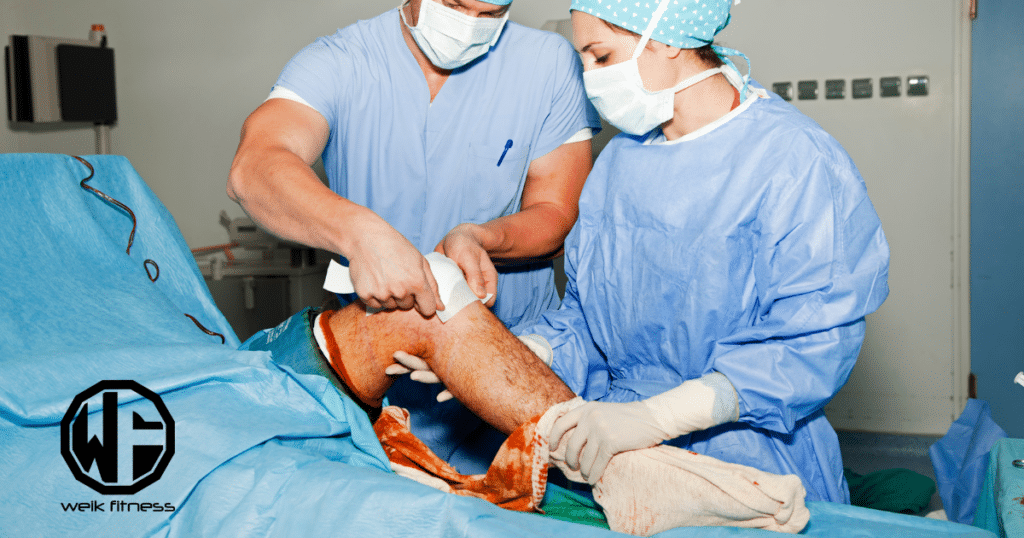
For a long time, surgery was the go-to answer for a torn meniscus. However, a growing body of evidence is challenging that approach, especially for degenerative tears.
A foundational 2016 study published in the BMJ was one of the first to directly compare the two treatments. Researchers from Norway and Denmark studied 140 adults with an average age of 50 who had degenerative meniscal tears confirmed by an MRI scan. Half of the participants had arthroscopic knee surgery followed by at-home exercises. The other half participated in a supervised exercise program 2-3 times per week for 12 weeks, with no knee surgery at all.
The results were compelling. After 12 weeks, the exercise-only group showed greater improvement in thigh muscle strength. More importantly, after two years, there were no significant differences between the groups in pain, knee function, or overall quality of life. This study suggested that for many, there’s no added benefit to going under the knife for this type of tear.
More recent research reinforces these findings. A 2024 meta-analysis concluded that for degenerative meniscal tears, exercise therapy and surgery have comparable effects on pain and function, but exercise showed a lower risk of knee osteoarthritis progression over the long term.
The reasoning is that strengthening the muscles around the knee, like the quadriceps and hamstrings, provides extra stability to the joint. This added support can compensate for the damaged meniscus, reducing pain and improving function without surgical intervention. This approach avoids the risks and costs associated with surgery, which is a multi-billion dollar industry.
In my experience, a well-structured strengthening program is one of the most powerful tools for managing knee health and avoiding unnecessary procedures. The goal is to build a natural brace for your knee using your own muscles.
Source: Nina Jullum Kise, May Arna Risberg, Silje Stensrud, Jonas Ranstam, Lars Engebretsen, Ewa M Roos. Exercise therapy versus arthroscopic partial meniscectomy for degenerative meniscal tear in middle aged patients: randomised controlled trial with two year follow-up. BMJ, 2016; i3740 DOI: 10.1136/bmj.i3740
FAQs About Knee Surgery
How long does it take for exercise to help a meniscal tear?
For non-surgical treatment, recovery typically takes about 6 to 8 weeks. A younger person might see significant improvement in 1-3 months, while it could take 3-6 months for someone older to achieve the same level of healing.
What exercises should I avoid with a meniscal tear?
You should avoid activities that put high impact or twisting forces on the knee. This includes deep squats, lunges, running, jumping, and sports that require sudden pivoting like basketball or soccer. Using a leg extension machine can also strain the meniscus and is often not recommended in early recovery.
Can a meniscal tear heal on its own with exercise?
It depends on the location of the tear. The outer third of the meniscus, known as the “red zone,” has a blood supply and can often heal with conservative treatment like physical therapy. Tears in the inner two-thirds, or the “white zone,” lack blood flow and are less likely to heal on their own.
When is knee surgery actually necessary for a meniscus tear?
Surgery is often the best option for large, traumatic tears that cause mechanical symptoms like the knee locking, clicking, or giving out. It’s also typically recommended for complex tears (like a “bucket handle” tear) or tears in the “white zone” that won’t heal naturally. If you have persistent pain and instability after 4-6 weeks of non-surgical treatment, a surgeon may recommend a procedure.


*Disclosure: This article may contain affiliate links or ads, which means we earn a small commission at no extra cost to you if you make a purchase through these links. These commissions help support the operation and maintenance of our website, allowing us to continue producing free valuable content. Your support is genuinely appreciated, whether you choose to use our links or not. Thank you for being a part of our community and enjoying our content.
PLEASE CONSIDER SHARING THIS ON YOUR SOCIAL MEDIA TO HELP OTHERS LEARN MORE ABOUT THIS TOPIC.