
Understanding the Cells in Your Body
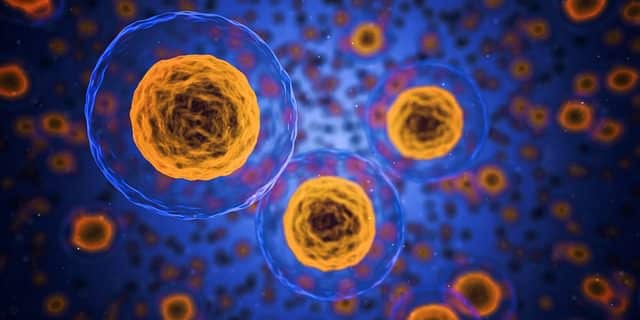
Did you know your body is a bustling metropolis made up of trillions of individual citizens? It’s true. Every process that keeps you alive, from breathing to thinking, is powered by the tireless work of the cells in your body.
Scientists estimate the average human body contains around 37.2 trillion cells, a concept first glimpsed by Robert Hooke in 1665 when he observed cork under a microscope.
These cells are the fundamental units of life. This guide will explore how they work together, maintain balance, and use basic chemistry to power everything you do.
Disclaimer: This article is for informational purposes only and is not meant to treat or diagnose any condition. It is recommended that you speak with your doctor before starting any exercise program, changing your daily nutrition, or adding any supplements to your regimen.
Table of contents
Key Takeaways
- Homeostasis is Key: Your body constantly works to maintain a stable internal environment, a process called homeostasis. This balance is crucial for cell survival and overall health.
- Cells Run on Chemistry: All cellular functions are driven by chemical reactions involving elements, electrons, ions, and chemical bonds.
- Electrolytes are Critical: Ions like sodium and potassium, known as electrolytes, are essential for nerve impulses, muscle contractions, and hydration.
- pH Balance is Vital: The body must maintain a strict acid-base balance, with blood pH kept tightly between 7.35 and 7.45 for cells to function correctly.
Homeostasis and the Cells in Your Body
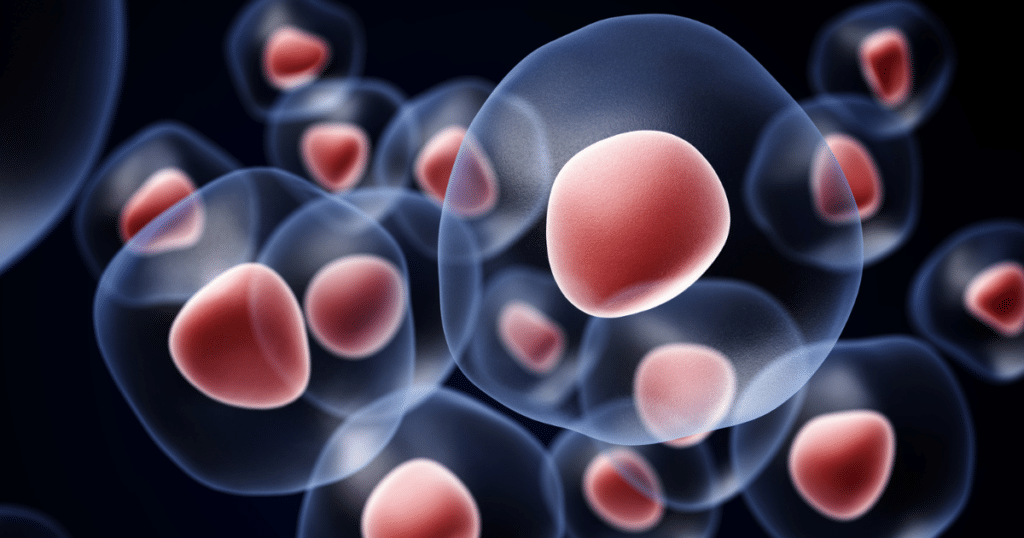
Homeostasis is your body’s intelligent system for maintaining a stable internal environment. Think of it as the thermostat for your body. When things change, your cells trigger reactions to minimize the disruption and keep conditions stable. In my experience as a coach, understanding this is fundamental to performance, as a failure to maintain homeostasis can lead to illness, fatigue, or even death.
Different concepts of homeostasis
Your body uses several strategies to maintain balance, all coordinated by the nervous and endocrine systems. These two major control systems act as the body’s communication network.
- Negative Feedback: This is the most common method. When your body senses a change, it works to reverse it. For instance, if your body temperature rises, you sweat to cool down. If it drops, you shiver to generate heat. The goal is to return to the set point, which for body temperature is around 98.6°F (37°C).
- Positive Feedback: This is much rarer. Instead of reversing a change, the body amplifies it. A classic example is childbirth, where the hormone oxytocin is released to intensify contractions until the baby is born.
- Dynamic Equilibrium: The body isn’t static; it operates in a balanced range around a set point. Your blood sugar, for example, fluctuates throughout the day but is kept within a healthy range by the hormones insulin and glucagon.
Components
This entire balancing act relies on three core components working together seamlessly.
- Receptor: This is the sensor that detects a change. A receptor can be a specialized cell or organ that notices a stimulus, like nerve cells in your skin sensing cold.
- Integrating Center: This is the control center, often the brain, that processes the information from the receptor. It compares the information to the normal set point and decides on a response.
- Effector: This is the muscle, organ, or cell that carries out the response to restore balance. In the cold example, the effectors are the muscles that contract to cause shivering.
Chemical Concepts of Cells in Your Body
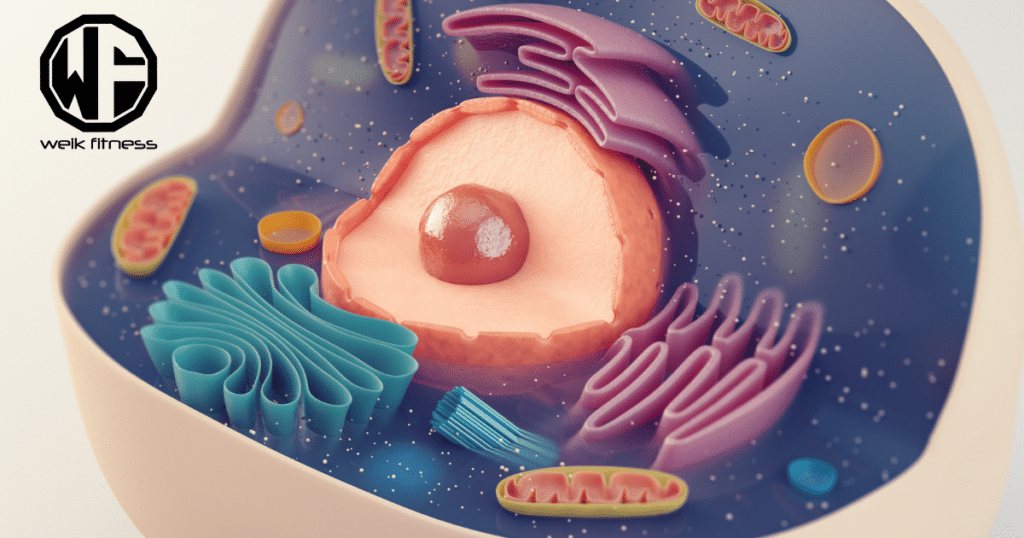
Every function of a cell depends on chemical reactions. To understand how cells work, you need to know the basic building blocks of matter.
Just four elements, Oxygen, Carbon, Hydrogen, and Nitrogen, make up over 96% of your body’s mass. Water alone, a compound of Hydrogen and Oxygen, accounts for about 60% of your total body weight.
The smallest unit of an element is an atom, which consists of positive protons, neutral neutrons, and negative electrons.
Electrons
Electrons are the superstars of chemistry because they determine how atoms interact. They orbit the atom’s nucleus in layers called shells. The electrons in the outermost shell, known as valence electrons, are what allow atoms to bond with each other to form molecules.
Ions

Atoms are most stable when their outer electron shell is full. To achieve this, they sometimes gain or lose electrons, becoming charged particles called ions. An atom that loses an electron becomes a positive cation (like sodium, Na+), while one that gains an electron becomes a negative anion (like chloride, Cl-).
When these ions dissolve in water, they form solutions that can conduct electricity. We call these electrolytes. As a sports nutritionist, I constantly stress the importance of electrolytes for my clients. They are essential for nerve function and muscle contraction. An imbalance is why you might get cramps during a workout. That’s why drinks like Gatorade are designed to replenish them.
Chemical Bonds
A chemical bond is the force that holds atoms together to form molecules. There are three main types you should know.
| Bond Type | Description | Example in the Body |
|---|---|---|
| Covalent Bond | The strongest bond, formed when atoms share electrons. Nonpolar bonds share equally, while polar bonds share unequally. | Water (H₂O) is a polar covalent molecule, essential for life. |
| Ionic Bond | An attraction between two oppositely charged ions (a cation and an anion). | Sodium Chloride (NaCl), or table salt, which is vital for fluid balance. |
| Hydrogen Bond | The weakest bond, a slight attraction between a positive hydrogen atom and a negative atom like oxygen or nitrogen. | These bonds hold the two strands of your DNA together. |
Chemical Reactions
A chemical reaction is simply a process that forms or breaks a chemical bond. The substances going into the reaction are called reactants, and the substances that come out are the products. All of life is driven by the constant motion and collision of molecules, which is the basis for these reactions.
What reactions are affected by
Several factors can change the speed of chemical reactions in the cells of your body.
- Concentration: The more reactants you have crowded into a space, the more likely they are to collide and react.
- Temperature: Higher temperatures make molecules move faster, leading to more forceful and frequent collisions. This is why a fever can be dangerous, it speeds up reactions to a harmful degree.
- Catalysts: These are substances that speed up reactions without being consumed. In the human body, our catalysts are specialized proteins called enzymes. For example, the enzyme lactase helps break down lactose, the sugar in milk.
The basics of Acids and Bases
The balance between acids and bases, measured by pH, is one of the most tightly regulated conditions in the body. An acid is a substance that releases hydrogen ions (H+) in water, while a base is a substance that accepts them.
The pH scale runs from 0 (most acidic) to 14 (most alkaline/basic), with 7.0 being neutral. Human blood must be kept in a very narrow range of 7.35 to 7.45. Any deviation can disrupt enzyme function and damage cells.
To prevent drastic swings in pH, the body uses chemical solutions called buffers, which can absorb excess acids or bases to keep things stable.
The Cells in Your Body Do Many Things
This was a quick look at the incredible world of the cells in your body. There is so much more to learn, and this article barely scratches the surface. Think of this as a cliff-note version on cells.
The information here should help you appreciate the complex processes happening inside you every second. Understanding your body at a cellular level is the first step to optimizing your health and fitness.
If this brief piece on cells sparked your curiosity about the human body, please consider sharing it with others.
FAQs About the Cells in Your Body
How many cells are in the human body?
While it’s impossible to count them exactly, scientific estimates place the number at around 37.2 trillion cells.
What are the main types of cells in your body?
There are over 200 different types of cells in the human body, each specialized for a specific function. Some examples include nerve cells (neurons) that transmit signals, red blood cells that carry oxygen, and muscle cells that enable movement.
How do cells get energy?
Most cells get energy through a process called cellular respiration. This process primarily takes place in an organelle called the mitochondrion, often called the “powerhouse” of the cell. It converts glucose (sugar) and oxygen into a usable form of energy known as ATP (adenosine triphosphate).
What is the difference between a cell and a tissue?
A cell is the single, basic unit of life. A tissue is a group of similar cells that work together to perform a specific function. For example, a muscle cell is a single cell, while muscle tissue is a collection of many muscle cells working in unison.


*Disclosure: This article may contain affiliate links or ads, which means we earn a small commission at no extra cost to you if you make a purchase through these links. These commissions help support the operation and maintenance of our website, allowing us to continue producing free valuable content. Your support is genuinely appreciated, whether you choose to use our links or not. Thank you for being a part of our community and enjoying our content.
PLEASE CONSIDER SHARING THIS ON YOUR SOCIAL MEDIA TO HELP OTHERS LEARN MORE ABOUT THIS TOPIC.