


The Best Health & Fitness Apps (Infographic)
People often ask me about my favorite health and fitness apps, and the list is always evolving.
As a personal trainer and sports nutritionist, I’ve seen firsthand how the right digital tool can completely change the game for someone trying to reach their goals.
The fitness app market is massive, with reports from Global Market Insights showing it surpassed $15 billion in 2023. This means you have more powerful options than ever before.
To help you cut through the noise, I created a breakdown of the best fitness apps and exactly how to use them to see real, lasting results.
Table of contents
The best fitness apps provide personalized guidance, data-driven tracking, and community motivation. For nutrition, MyFitnessPal is a top choice due to its huge food database. For exercise, apps like Strava and Peloton build community, while Jefit is excellent for detailed strength training logs. To maximize results, use the data these apps provide to make informed adjustments to your routine and stay consistent.

The Best Health & Fitness Apps — According to the Folks at Weik Fitness
If you want to get in the best shape of your life, using the right fitness apps can drastically improve your results. The key is to find the one that matches your specific goal. In my experience, nutrition is the foundation of any successful fitness plan, making up about 80% of your results.
For that reason, I believe everyone should use a nutrition tracker like MyFitnessPal. Its food database contains over 14 million items, and its barcode scanner makes logging meals incredibly simple and accurate. You truly can’t out-train a poor diet, and this app provides the necessary accountability.
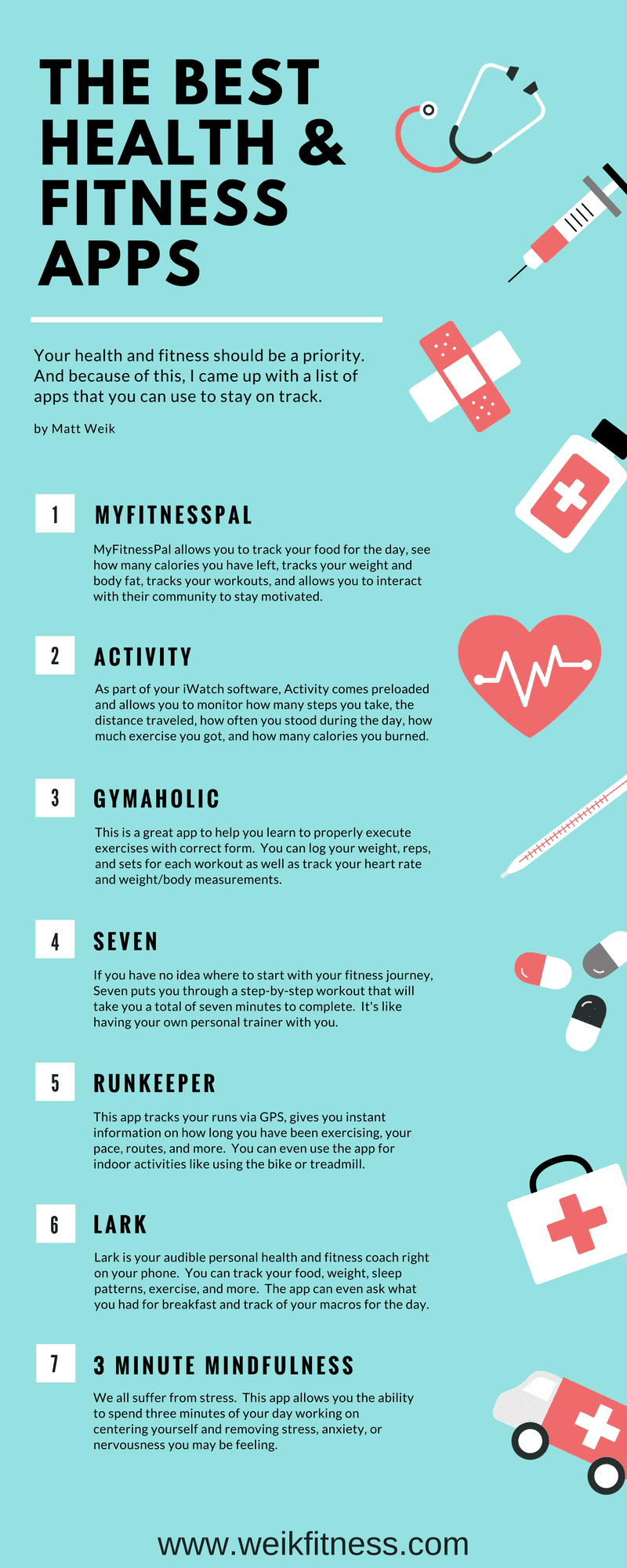
Get the Most Out of Health and Fitness Apps
In the digital age, health and fitness have taken a significant leap forward. With an array of health and fitness apps available, you now have the power to take control of your well-being. These tools help you track your progress and make informed decisions about your lifestyle choices.
Here is how you can use these apps to maximize your results and achieve optimal health.
1. Personalized Guidance and Customization
One of the most compelling reasons to use top-tier health and fitness apps is the personalized guidance they offer. These apps often use advanced algorithms to understand your fitness level and goals. By tailoring workouts and nutrition plans, they provide a unique advantage that generic plans cannot match.
For example, an app like Jefit allows you to create highly specific weightlifting routines, while Future pairs you with a real-life remote personal trainer for about $199 per month. This level of personalization keeps you engaged and motivated, leading to better results.
2. Data-Driven Progress Tracking
The best health apps let you monitor your progress with precision. Regularly tracking metrics like steps, calories burned, heart rate, and sleep quality provides valuable insights. A 2022 study in the British Journal of Sports Medicine confirmed that self-monitoring with apps is linked to increased physical activity.
These apps present data in clear formats, making it easy to see progress and identify areas for improvement. This allows you to set realistic goals and adjust your routine, ensuring consistent progress.
3. Accountability and Motivation
Achieving your goals requires dedication. The accountability provided by top health and fitness apps proves invaluable here. Many apps offer features like workout reminders and social interactions that build a supportive community.
Strava is a perfect example, with its community of over 100 million athletes who share activities and give “Kudos” for encouragement. The Peloton leaderboard creates a sense of friendly competition that motivates users to push harder during workouts.
4. Variety and Diversity
Boredom can be a major barrier to maintaining a consistent routine. The best fitness apps solve this by offering a wide variety of workouts and wellness activities. This helps prevent monotony and plateaus.
- Nike Training Club: Offers a massive library of free workouts, from HIIT and yoga to strength training.
- ClassPass: Allows you to book classes at different fitness studios in your area, offering incredible variety.
- Peloton App: Provides thousands of on-demand classes, including cycling, running, strength, and even meditation.
5. Expert Guidance and Education
High-quality fitness apps often collaborate with experts like certified trainers, nutritionists, and wellness coaches. This gives you access to valuable, evidence-based information. This is essential given the amount of misinformation online.
For instance, Calm and Headspace work with mindfulness experts and psychologists to create effective meditation and sleep programs. A study published in the Journal of Medical Internet Research showed Headspace was effective in reducing symptoms of depression in users.
6. Time and Convenience
Modern life is busy, leaving little time for health and fitness. The convenience offered by fitness apps is a huge benefit. You can access workouts, meal plans, and wellness tips whenever it fits your schedule.
Apps like the Johnson & Johnson Official 7 Minute Workout are designed specifically for this. They offer short, effective, science-based workouts that you can do at home, in the gym, or on the go. This flexibility ensures that your health remains a priority.
Conclusion
In a world where technology integrates with daily life, using the best health and fitness apps is a smart move toward achieving your goals. They empower you to take control of your health journey.
The personalized guidance, data tracking, and motivation offered by these apps all contribute to maximizing your fitness results.
By embracing these innovative tools, you can unlock your full potential and build a healthier, more fulfilling life.
FAQs About Fitness Apps
Are free fitness apps effective?
Absolutely. Many free apps provide incredible value. Nike Training Club offers its entire library of premium workouts for free. The free version of MyFitnessPal is a powerful tool for calorie and macro tracking. You don’t need to pay to get started or see great results.
How much do fitness apps cost?
Pricing varies widely. Many apps operate on a “freemium” model, with a free basic version and a premium subscription for advanced features. These subscriptions typically range from $10 to $30 per month. Highly personalized services like Future, which include a human coach, can cost around $199 per month.
What is the best app for tracking exercise?
It depends on your primary activity. For running and cycling, Strava is the community favorite due to its GPS tracking and social features. For strength training, Jefit is excellent for logging sets, reps, and weight, with a large library of exercises to guide your workouts.


*Disclosure: This article may contain affiliate links or ads, which means we earn a small commission at no extra cost to you if you make a purchase through these links. These commissions help support the operation and maintenance of our website, allowing us to continue producing free valuable content. Your support is genuinely appreciated, whether you choose to use our links or not. Thank you for being a part of our community and enjoying our content.
PLEASE CONSIDER SHARING THIS ON YOUR SOCIAL MEDIA TO HELP OTHERS LEARN MORE ABOUT THIS TOPIC.