


Home Gym vs. Gym Membership: What Should You Get?
Deciding between building a home gym and getting a gym membership is a huge step in taking control of your health. As a certified personal trainer and sports nutritionist, I can tell you that investing in your fitness is always the right move.
Yes, the upfront cost of a home gym can seem high. But over time, you will see the immense value it provides. You save on membership fees, gas, and most importantly, your time.
Even if you don’t have a lot of space, many great pieces of equipment are designed for small areas. You can easily fit a powerful workout station in a corner or your garage. This guide will break down the true costs and benefits to help you make the best choice for your fitness journey.
Disclaimer: This article is for informational purposes only and is not meant to treat or diagnose any condition. It is recommended that you speak with your doctor before starting any exercise program, changing your daily nutrition, or adding any supplements to your regimen.
Table of contents
Key Takeaways
- Long-Term Savings: A home gym has a higher upfront cost but can save you thousands of dollars over several years compared to ongoing gym membership fees, which often include hidden annual charges.
- The True Cost of a Membership: The sticker price of a gym membership is just the start. You must also factor in the cost of gas for travel and the value of your time spent commuting, which can easily double your monthly expense.
- Convenience and Consistency: Having a home gym eliminates common excuses like bad weather or lack of time, making it easier to stay consistent with your exercise routine. A study from the IHRSA found that nearly 22% of gym members stop going within the first six months.
- Smart Equipment Choices: You can build a complete and effective home gym without buying a dozen machines. Prioritize versatile pieces like a quality squat rack, an adjustable bench, and a barbell set to cover all your fitness needs.

Is a Gym Membership Worth the Real Cost?
A gym membership often looks like a great deal on the surface, but the true cost is much higher than the monthly fee. Let’s break down the real numbers so you can see the complete financial picture.
Basic memberships at chains like Planet Fitness might start around $10, but mid-tier gyms can easily cost between $40 to over $100 per month. A 2024 report shows the average gym membership in the U.S. hovers around $58 per month. Many gyms also charge an annual “maintenance fee” of $40 to $60, which isn’t always mentioned upfront.
The biggest hidden cost is your time and travel. If you drive to the gym, you are paying for gas and putting wear and tear on your car. Your time is valuable, and spending it in traffic is a cost you can’t get back.
Here’s a more realistic calculation:
- Average Membership: $58/month
- Annual Fee (prorated): $4/month
- Gas for Travel: Let’s assume you go 4 times a week. With gas prices around $3.50 per gallon, even a short trip can add up to $25-$35 per month.

Suddenly, that $58 membership is actually costing you closer to $90 per month, or $1,080 per year. Over a decade, that’s over $10,000. For that amount of money, you could build a high-quality home gym that lasts a lifetime.
This financial breakdown doesn’t even account for the convenience factor or overcoming workout anxiety, which is a real barrier for many people. If you struggle with gym intimidation, this article on strategies to overcome gym anxiety offers some great advice.
How to Build Your Perfect Home Gym
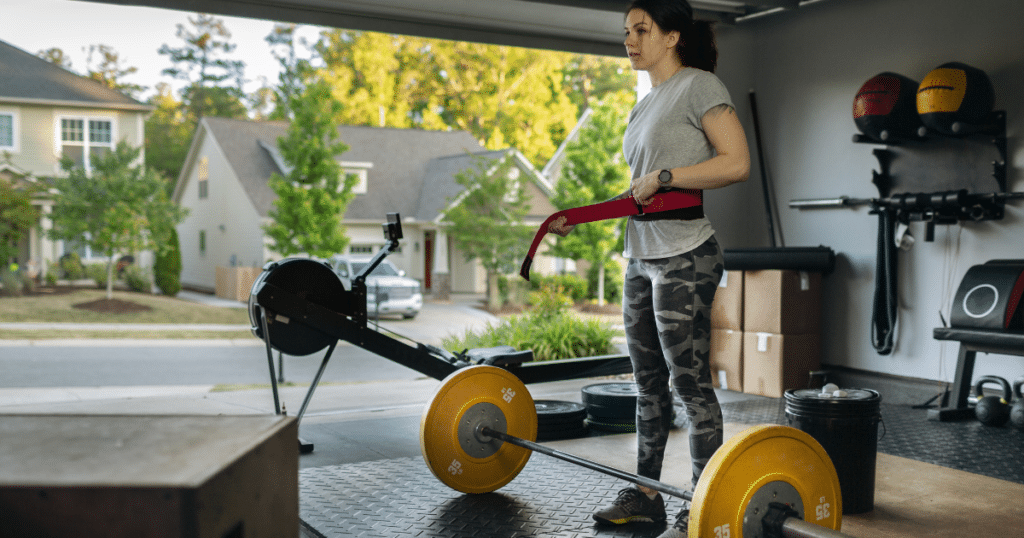
Building a home gym gives you complete control over your workout environment. You can place it in a basement, a garage, or even a spare room. You do not need a massive amount of space to create an effective fitness area.
In my experience as a coach, the key is to invest in versatile, high-quality pieces that will last. My advice is to “buy once, cry once.” A cheap, wobbly bench is a safety hazard and will need to be replaced, costing you more in the long run.
Core Equipment for a Complete Workout
You can hit every muscle group effectively with just three key items. This is where you should focus your initial budget.
- A Power Rack: This is the centerpiece of your home gym. A good squat rack allows you to safely perform essential exercises like squats, bench presses, and overhead presses. Brands like Rogue Fitness and Titan Fitness offer excellent options from $500 to $1,000. Some models, like this all-in-one press machine, combine multiple functions.
- Barbell and Weight Plates: An Olympic barbell is a must. You can often find a 300-pound Olympic weight set that includes the bar for around $400. This is more than enough weight for most people to start with.
- An Adjustable Bench: A quality weight bench is crucial for safety and versatility. Look for one with a high weight capacity (over 500 pounds). Companies like REP Fitness offer sturdy, reliable benches for $200 to $500.
With these three items, your initial investment would be around $1,100 to $1,900. This is less than two years of the “true cost” of a gym membership, and this equipment will last you for decades.
What About Cardio and Dumbbells?
A common concern I hear is about missing the variety of machines at a commercial gym. While you can’t replicate a $100,000 facility at home, you can make smart additions that provide incredible value.
Space-Saving Dumbbell Solutions
A full rack of dumbbells takes up a lot of space. For most home gyms, adjustable dumbbells are the perfect solution. They allow you to change weights quickly and take up the footprint of just one pair.
- Top Brands: Look into trusted names like Bowflex SelectTech or PowerBlock. These systems have been proven effective for years.
- Key Features: Consider the weight range, how easily you can adjust them, and their overall durability before you buy.
Choosing Your Cardio
You don’t need a row of different cardio machines. Pick one or two types of cardio you genuinely enjoy and will use consistently. An air bike like the Rogue Echo Bike or a rower like the Concept2 RowErg provides a fantastic full-body workout and is built to last.
You can also find great deals on used commercial-grade equipment. I’ve personally bought several remanufactured pieces from a business called RVA Fitness. Years later, they still run perfectly. A quick search for “used commercial gym equipment” in your area can uncover some amazing finds.
And remember, you can always get effective cardio for free by jogging outside, jumping rope, or doing bodyweight circuits like burpees.
My Personal Experience with a Home Gym
I’m sharing this with you because I live it. I’ve dedicated a significant portion of my basement, about 1,200 sq. ft., to my own personal fitness sanctuary. It includes everything from a squat rack and cable crossover to a full set of dumbbells and commercial cardio machines from Life Fitness.
My investment was substantial, but it was an investment in my health and my time. The convenience of never having to leave my house to get a world-class workout is priceless. You don’t need to go to the extreme that I did, but I can promise that once you build your own home gym, you will love the freedom and results, with zero regrets.


*Disclosure: This article may contain affiliate links or ads, which means we earn a small commission at no extra cost to you if you make a purchase through these links. These commissions help support the operation and maintenance of our website, allowing us to continue producing free valuable content. Your support is genuinely appreciated, whether you choose to use our links or not. Thank you for being a part of our community and enjoying our content.
PLEASE CONSIDER SHARING THIS ON YOUR SOCIAL MEDIA TO HELP OTHERS LEARN MORE ABOUT THIS TOPIC.
Frequently Asked Questions
1. Is a home gym better for beginners?
A home gym can be excellent for beginners. It provides a private, judgment-free space to learn exercises and build confidence. Many beginners feel anxious at a commercial gym. At home, you can focus on your form without worrying about others. Plus, online resources and apps like Peloton or Future can provide guided workouts right in your space.
2. What is the minimum space I need for a home gym?
You can create a very effective workout space in an area as small as 10 feet by 10 feet. This is enough room for a power rack, a bench, and floor space for exercises. For those with even less room, a set of adjustable dumbbells and an adjustable bench can fit in the corner of a room.
3. How can I stay motivated without the gym atmosphere?
Motivation at home comes from building a routine and removing obstacles. Since your commute is seconds long, it’s easier to be consistent. To create atmosphere, put on your favorite music, follow along with a high-energy online class, or use a workout app that tracks your progress. Setting clear goals is key, no matter where you exercise.