

Fisetin: Antioxidant for Lifespan & Healthy Aging
Are you someone who thinks about their health and lifespan? If so, fisetin is something you should really dive deeper into.
If you ever look into cellular health, you have probably seen fisetin described as a senolytic flavonoid for healthy aging. The reason people pay attention is simple: it looks strong in preclinical aging research, and it naturally occurs in foods you already know, especially strawberries.
The key distinction is that it looks much better in cells and mice than it does in humans so far. That makes it interesting, but it does not make it proven.
Below, we’ll unpack what fisetin is, which fruits and vegetables contain it, how its antioxidant and senolytic actions may affect health span and lifespan, and what current clinical trial research actually supports.
Key Takeaways
- In lab and mouse studies, fisetin acts as an antioxidant and senolytic, meaning it can reduce oxidative stress and help clear some senescent cells that drive inflammation.
- Fisetin is a dietary flavonoid and polyphenol found in foods like strawberries, apples, persimmons, and onions, with strawberries standing out as the richest common food source.
- Food can raise your intake of fisetin, but it does not match most study protocols. A generous serving of strawberries gives you milligram-level intake, while many human trials test much higher supplement doses.
- Human evidence is still early. A small 2024 pilot study in healthy adults over 50 found mixed biological aging results, so fisetin is not a proven anti-aging supplement.
- Fisetin has low bioavailability, and U.S. supplements are regulated as foods rather than pre-approved drugs, so product quality, dose, and medication review matter before you try a fisetin supplement.
What is Fisetin?
Fisetin is a dietary flavonoid, a plant-based polyphenol found in fruits, vegetables, and a few traditional botanical sources. You will most often hear about it in strawberries, apples, persimmons, onions, grapes, tomatoes, cucumbers, peaches, and kiwis.
What makes fisetin different from many other flavonoids is its strong reputation as a senolytic agent. In preclinical work, it drew attention for being especially potent among flavonoids tested for clearing senescent cells, which is one reason it is often discussed alongside quercetin in healthy aging circles.
Researchers have reported that fisetin can target senescent cells and reduce inflammatory signaling, and that in animals it can improve health span and lifespan markers. That sounds exciting, but there is an important catch: it has poor water solubility, low oral bioavailability, and a short circulation time, which helps explain why supplement formulas and dosing schedules vary so much.
In plain English, fisetin is a promising antioxidant and senotherapeutic compound, but it is still a compound under investigation, not a settled answer for longevity.
Natural Sources of Fisetin
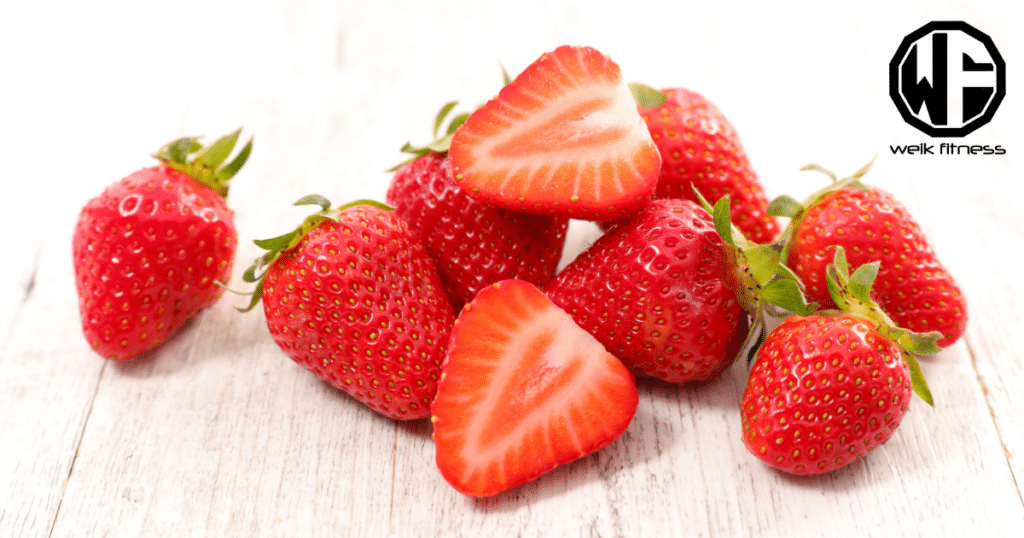
You can get it from whole foods, and for most health and fitness enthusiasts, that is the best place to start. Whole foods give you fisetin along with fiber, vitamin C, potassium, and other polyphenols that work together in a normal diet.
Which fruits and vegetables contain high levels?
The strongest food source data still points to strawberries as the standout choice.
| Food | Fisetin (μg/g) | What it means for you |
|---|---|---|
| Strawberries | 160 | The richest common food source, great if you want to raise dietary intake without using a supplement. |
| Apples | 26.9 | Easy to eat regularly, but much lower than strawberries. |
| Persimmons | 10.5 | A useful seasonal source if you already enjoy them. |
| Onions | 4.8 to 5 | Helpful as part of daily meals, though the amount is modest. |
| Kiwis, peaches, grapes, tomatoes, cucumbers | Lower amounts reported | They contribute, but they are not the foods researchers lean on for high fisetin intake. |
A practical way to think about it is this: a 150-gram serving of strawberries works out to about 24 mg of fisetin, while a medium apple lands closer to 5 mg. That is useful for everyday nutrition, but it is still well below many clinical studies that test fisetin in the hundreds of milligrams or at body-weight-based doses.
- If your goal is healthy aging through diet, strawberries are the smartest whole-food play.
- If your goal is to mimic a trial dose, food alone is unlikely to get you there.
- If you do use a dietary supplement, treat food as the foundation, not as competition.
How does fisetin naturally occur in plants?
Plants make fisetin as part of their flavonoid defense system. Like other polyphenols, it helps them respond to stress from oxidation, ultraviolet light, and microbes.
That matters because fisetin’s antioxidant activity in plants lines up with the same pathways researchers study in aging biology, oxidative stress, and cellular resilience. The overlap does not prove human benefit, but it does explain why fisetin has been studied so heavily.
- Plants use flavonoids like fisetin as stress-response compounds.
- Food levels vary by species, ripeness, and growing conditions.
- Whole foods deliver fisetin in a natural matrix, which is different from taking isolated fisetin in capsule form.
Key Benefits of Fisetin & Fisetin Supplementation
The main reason fisetin stands out is that it touches three high-interest areas in aging research: oxidative stress, senescence, and brain health. The strength of evidence is not equal across those areas, so it helps to separate what is solid in the lab from what is still unproven in humans.
| Benefit area | Best evidence so far | How to interpret it |
|---|---|---|
| Antioxidant and anti-inflammatory effects | Cell and animal studies | Promising mechanistic evidence, but not a guarantee you will feel a noticeable effect. |
| Senolytic activity | Preclinical aging models plus ongoing human trials | This is the biggest reason fisetin gets longevity attention. |
| Brain health support | Mainly animal and lab studies | Interesting early signal, but human cognitive benefit is still unproven. |
Some fisetin supplements to consider include:
- Toniiq Fisetin
- HUMANX Fisetin
- Life Extension Bio-Fisetin
- Nutricost Fisetin
- Double Wood Supplements Fisetin
How does fisetin reduce inflammation with antioxidant properties?
Fisetin has been shown to lower oxidative stress in preclinical models by reducing reactive oxygen species and supporting the cell’s own antioxidant defenses. Researchers also study its effect on pathways such as Nrf2 and NF-kB, because those pathways help control how cells respond to stress and inflammation.
This matters for healthy aging because chronic low-grade inflammation often travels with poor recovery, vascular dysfunction, and slower tissue repair. When you see fisetin described as an antioxidant, the useful takeaway is that researchers are looking at it as a way to calm stress signaling, not as a stimulant or quick-fix performance enhancer.
- Its strongest anti-inflammatory evidence comes from cell and animal work.
- The effect of fisetin in humans is still being tested, so claims of guaranteed recovery or pain relief go too far.
- If you want a low-risk first step, increasing intake of fisetin-rich fruits and vegetables makes more sense than chasing megadoses.
What is senolytic activity, and how does fisetin clear damaged cells?
A senescent cell is a cell that has stopped dividing but has not quietly shut down. Instead, it can keep releasing inflammatory signals that affect nearby tissue. A senolytic is a compound studied for its ability to push some of those cells to die off so the body can clear them.
That is where fisetin became famous. Mouse and tissue studies showed that fisetin could lower senescence markers such as p16 and p21 in certain cell types and tissues, especially adipose tissue. At the same time, the work also showed something important that many supplement articles skip: Fisetin is cell-type specific. It does not act like a universal cleanup tool in every tissue.
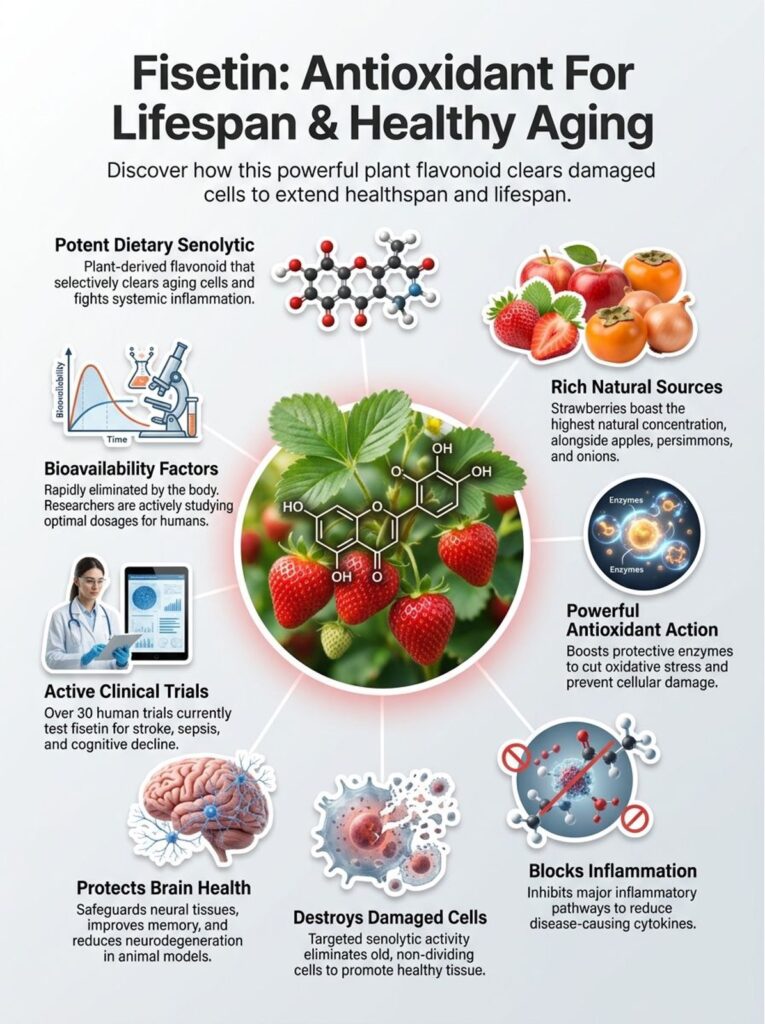
Senolytic does not mean “reverses aging overnight.” It means researchers are testing whether fisetin can reduce one aging pathway, in certain cells, under specific dosing conditions.
That cell-type specificity is one reason human studies often use intermittent dosing instead of daily high use. Several trials have tested about 20 mg/kg for two consecutive days, followed by time off, because the compound clears quickly and the goal is a short senolytic pulse rather than constant exposure.
- Fisetin selectively targets some senescent cells in lab and animal models.
- Quercetin is another flavonoid in this conversation, but fisetin gets more attention as a standalone senolytic candidate.
- If a product promises daily “senescent cell clearance” with certainty, it is overselling the evidence.
How does fisetin support brain health with neuroprotective effects?
Fisetin is also studied for brain health because it shows anti-inflammatory, antioxidant, and anti-apoptotic effects in neural tissue models. In animals, researchers have reported better memory performance, stronger synaptic signaling, and lower markers of neurodegeneration after fisetin treatment.
That is why fisetin often shows up in conversations about cognitive longevity and why some people compare fisetin and quercetin in supplement stacks. Still, the strongest evidence remains preclinical. There is no established human proof that fisetin improves memory, prevents dementia, or preserves cognition late in life.
- Treat brain-health claims for fisetin as experimental, not proven.
- The current signal is strongest in mice and cell models, not in human outcome trials.
- If your priority is long-term cognition, fisetin may be interesting, but it should sit behind basics like sleep, training, blood pressure control, and nutrition quality.
What Does Current Research Say About Fisetin?
Current research says fisetin is worth watching, but it is still in the testing phase. The U.S. clinical trial registry now shows several fisetin studies across aging, inflammation, osteoarthritis, infection, cancer survivorship, sleep, and pharmacokinetics.
| Study | Focus | Key design detail | Status snapshot |
|---|---|---|---|
| NCT05758246, Mayo Clinic | Sepsis in adults age 65 and older | Phase 2, 220 participants | Completion expected in 2026 |
| NCT03675724, Mayo Clinic | Frailty, inflammation, and related aging measures | Intermittent fisetin dosing in older adults | Public record updated, results still limited |
| NCT04210986, Steadman Philippon Research Institute | Knee osteoarthritis | Phase 1/2, 75 participants | Completed in 2023 |
| NCT07195318 | Healthy aging | 100 mg daily for 7 weeks, 120 adults age 50 and older | Primary completion expected October 2026 |
| NCT06113016, multicenter U.S. cancer trial | Physical function and frailty in breast cancer survivors | Fisetin on days 1 to 3 of repeated cycles, with or without exercise | Active U.S. study sites |
The most useful message from those trials is that there is no single standard fisetin dose. Some studies use short pulses around 20 mg/kg, others use 100 mg daily, and some newer protocols test 500 mg daily. That wide spread tells you the field is still figuring out absorption, timing, and the best target population.
A 2024 pilot study in 10 healthy adults over age 50 offers a good reality check. Participants used 500 mg daily for one week each month over six months, and the biological age results were mixed. Four participants improved, five worsened, one stayed the same, and the authors did not recommend fisetin as an anti-aging supplement based on that small study.
RELATED: How to Naturally Fight the Aging Process
You should also be careful with cancer headlines. Lab work in cancer cell lines, including human prostate cancer cells, often looks promising because fisetin can slow growth signals and induce apoptosis. That is useful for hypothesis building, but it does not mean fisetin treats cancer in people.
Safety remains another open area. Short-term human studies have reported mild or no serious adverse effects in small groups, but long-term safety, product consistency, and drug interaction risk are still not well defined. FDA regulates dietary supplements as foods, not as pre-approved anti-aging drugs, so it makes sense to review any fisetin supplement with a clinician, especially if you take prescription medications or manage a chronic condition.
Fisetin is Great for Cellular Health, Prolonged Lifespan, and Healthy Aging
Fisetin is one of the more interesting flavonoids in healthy aging research because it combines antioxidant and senolytic activity in preclinical studies. The strongest evidence still comes from lab and mouse work, not from large human trials.
RELATED: Telomere Shortening — Its Role in Cancer and the Aging Process
You can raise intake through strawberries, apples, onions, and other produce, but food amounts stay far below most study doses. If you are thinking about a fisetin supplement, talk with a clinician first, especially because bioavailability is low, trial dosing varies, and human results remain early and mixed.
FAQs
Fisetin is a plant flavonoid found in fruits and vegetables, and it is widely used in research and the supplement industry.
Several studies have demonstrated that fisetin improves markers of health span and reported that fisetin resulted in lower cell damage in lab tests. These data suggest that fisetin may slow the signs of aging.
Yes, demonstrated that fisetin lowers senescence markers, and fisetin induces apoptosis in harmful cells, which is part of the action of fisetin as a potent senolytic.
Fisetin has low adverse side effects in many reports, and some studies found no harm without any adverse effects at studied doses. Still, talk with your doctor before taking fisetin.
Fisetin in human prostate cancer studies showed promise, and reported that fisetin can slow the progression of prostate cancer in lab tests. Fisetin in mice, and in some rodent studies to determine the effects, also showed similar effects on tumor cells.
Fisetin and quercetin have related activity, yet they differ in strength and dose, so compare labels and quality in the supplement industry. If you are taking fisetin, work with a clinician to determine the effects of fisetin for your needs.
References
- https://pmc.ncbi.nlm.nih.gov/articles/PMC6197652/
- https://pmc.ncbi.nlm.nih.gov/articles/PMC3689181/
- https://pmc.ncbi.nlm.nih.gov/articles/PMC12899922/
- https://pmc.ncbi.nlm.nih.gov/articles/PMC8839434/
- https://pmc.ncbi.nlm.nih.gov/articles/PMC9589363/


*Disclosure: This article may contain affiliate links or ads, which means we earn a small commission at no extra cost to you if you make a purchase through these links. These commissions help support the operation and maintenance of our website, allowing us to continue producing free valuable content. Your support is genuinely appreciated, whether you choose to use our links or not. Thank you for being a part of our community and enjoying our content.
PLEASE CONSIDER SHARING THIS ON YOUR SOCIAL MEDIA TO HELP OTHERS LEARN MORE ABOUT THIS TOPIC.