

6 Face Exercises for a Strong and Masculine Jawline
Many people are looking for ways to get a sharper, more defined jawline. A strong jaw is often seen as a sign of fitness and health, which is why face exercises have become so popular for achieving a more sculpted look.
If you’re trying to reduce the appearance of a double chin, the good news is you have options that don’t involve expensive cosmetic procedures.
As a certified strength and conditioning coach, I’ve seen how targeted exercises can transform the body, and the same principles can apply to the face. You can perform simple, effective face exercises right in the comfort of your own home to start building a stronger jawline.
This guide will show you six specific face exercises designed to firm up your jaw and help reduce a double chin. Let’s get started.
Related Article: Facial Fitness — How Mewing Can Reshape Your Features
Disclaimer: This article is for informational purposes only and is not meant to treat or diagnose any condition. It is recommended that you speak with your doctor before starting any exercise program, changing your daily nutrition, or adding any supplements to your regimen.
Table of contents
Key Takeaways
- Facial exercises can help strengthen and define the muscles in your jaw and neck, potentially leading to a more sculpted appearance.
- Consistency is crucial. Performing these exercises regularly is more important than the intensity of any single session.
- Proper form helps target the right muscles, like the masseter and platysma, while reducing the risk of strain or jaw pain.
- Combining face exercises with a healthy diet, overall fitness, and good posture will yield the best results for a stronger jawline.
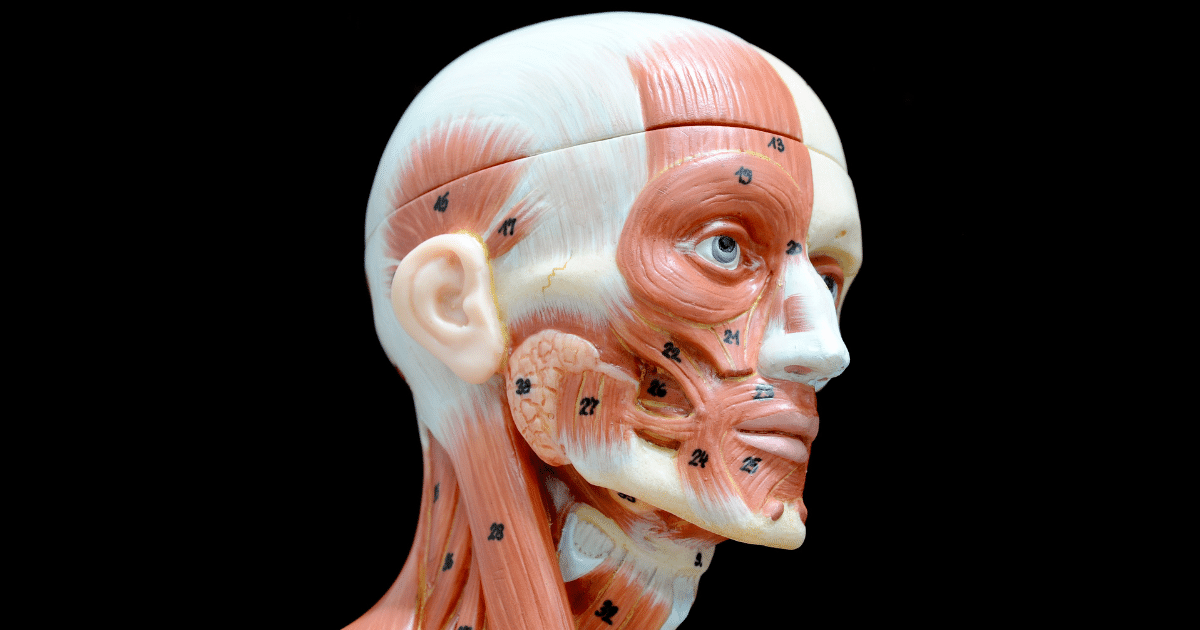
6 Face Exercises to Get a Strong Jawline & Lose Your Double Chin
Face exercises, sometimes called facial yoga, may help improve facial muscle tone and reduce the appearance of a double chin. A study published in JAMA Dermatology in 2018 found that a 30-minute daily facial exercise program over 20 weeks improved mid-face and lower-face fullness in middle-aged women.
Here are six exercises you can start today. Think of them as a workout for your face, focusing on proper form and consistency.
Side note: You could also try one of these jaw exercisers, but be cautious. Some physical therapists warn that aggressive use of these devices could lead to temporomandibular joint (TMJ) issues.
1. Lower Jaw Push
This exercise directly targets the muscles under your chin to help lift and tighten the area. It’s a great move for strengthening the jawline and neck.
How to do it:
- Sit or stand with a straight spine.
- Push your lower jaw out and lift your lower lip over your upper lip. You should feel a stretch building just under your chin and in your jawline.
- Hold this position for 10-15 seconds, then relax.
- Complete 3 sets of 15 repetitions.

2. Fish Face
The fish face exercise is excellent for toning your cheek muscles, specifically the buccinator muscle. Strengthening this muscle can contribute to a leaner, more defined facial appearance.
This exercise helps create a more “hollow” look in the cheeks, which in turn accentuates the jawline.
How to do it:
- Suck your cheeks in as much as you can, like a fish.
- While holding this position, try to smile.
- Hold for 15-20 seconds, release, and repeat 10-15 times. You should feel a slight burn in your cheeks, which tells you the muscles are working.
3. Vowel Exercises
This may sound simple, but exaggerating vowel sounds engages many of the muscles around your mouth and on the sides of your face.
How to do it:
Open your mouth wide and say “O,” followed by “E.” Be very deliberate and exaggerate the facial movements. The “O” sound engages the muscles around your jaw, while the “E” sound works the muscles on the side of your face.
Try to perform 3 sets of 15 repetitions for each sound to feel the muscles working.
4. Chewing Gum
Chewing is a powerful and often overlooked exercise for the jaw muscles, particularly the masseter muscle, which is responsible for the square shape of a strong jaw.
For a more intense workout, many people are turning to harder gums. Mastic gum, a resin from the mastic tree, is significantly tougher than regular gum. Brands like Jawliner or Greeks Mastic Gum are popular choices for providing resistance to build jaw muscles. Always chew evenly on both sides to ensure balanced muscle development.
Pro Tip: Start with just 10-15 minutes of chewing a day to avoid overworking the jaw and causing pain or TMJ issues. Slowly increase the duration as your jaw strength improves.
5. Collarbone Backup
This exercise targets the muscles under your chin, including the platysma muscle. A weak platysma can contribute to a sagging neck, so keeping it toned is key.
How to do it:
- Sit or stand with a long spine.
- Keeping your head level, bring it straight back several inches until you feel the muscles on both sides of your throat contract. Don’t tilt your head back; the movement is a straight retraction.
- Hold for 10 seconds, then slowly return to the starting position.
- Aim for 3 sets of 10 repetitions.
6. Chin Tuck
The chin tuck is not only great for the jawline but also for correcting forward head posture, often called “tech neck,” which can weaken the jawline’s appearance. This exercise strengthens the deep cervical flexor muscles in the front of your neck.
How to do it:
- Lie on your back with your tongue pressed to the roof of your mouth (this helps activate the neck muscles).
- Without lifting your head off the floor, bring your chin down toward your chest.
- Hold this “tucked” position for 10-15 seconds and then relax.
- Start with 3 sets of 5-10 repetitions and gradually increase as you get stronger.
In my experience as a trainer, consistency beats intensity every time. Add these face exercises into your daily routine to work toward a more defined and strong jawline.
Related Article: Men’s Skincare and Anti-Aging Routines Are the Craze
FAQs About Face Exercises
How long does it take to see results from face exercises?
Results vary depending on factors like age, skin elasticity, and consistency. Some people report noticing subtle changes within 3-4 weeks, with more significant results appearing after a few months of daily exercise. The 2018 JAMA Dermatology study saw results after 20 weeks of consistent practice.
Can face exercises be harmful?
Yes, if done incorrectly or too aggressively. Overworking the jaw muscles can lead to temporomandibular joint (TMJ) disorders, causing pain, clicking, and headaches. Always start gently, focus on proper form, and stop if you feel any sharp pain.
Do these exercises get rid of fat under the chin?
These exercises primarily build muscle, which can create a tighter, more toned appearance. While they can help, significant fat loss under the chin (submental fat) is most effectively achieved through overall weight loss, which cannot be spot-reduced. A 2021 report from the American Society of Plastic Surgeons shows that non-invasive fat reduction procedures are also a popular option for this area.
What is the best exercise for the masseter muscle?
Chewing tough substances is the most direct way to work the masseter muscle. Using a hard gum like mastic gum provides resistance to stimulate muscle growth, helping to create a wider, more angular jaw.


*Disclosure: This article may contain affiliate links or ads, which means we earn a small commission at no extra cost to you if you make a purchase through these links. These commissions help support the operation and maintenance of our website, allowing us to continue producing free valuable content. Your support is genuinely appreciated, whether you choose to use our links or not. Thank you for being a part of our community and enjoying our content.
PLEASE CONSIDER SHARING THIS ON YOUR SOCIAL MEDIA TO HELP OTHERS LEARN MORE ABOUT THIS TOPIC.