

5 Agility Exercises That Make Working Out More Fun
If cardiovascular exercise isn’t your favorite part of a workout, you can make it more engaging with these five agility exercises. The best part is that you don’t need any fancy gym equipment to get started.
All you need is your body, a few common household items, and enough safe space to move. As a certified strength and conditioning coach, I’ve seen these drills transform workouts from a chore into a challenge.
*Note: Always warm up with 5-10 minutes of dynamic stretching, like leg swings and torso twists, before starting these agility exercises.
Disclaimer: This article is for informational purposes only and is not meant to treat or diagnose any condition. It is recommended that you speak with your doctor before starting any exercise program, changing your daily nutrition, or adding any supplements to your regimen.
Table of contents
Key Takeaways
- Agility exercises improve your ability to change direction quickly, enhancing athletic performance and making daily movements safer.
- This type of training offers significant cognitive benefits, improving reaction time and decision-making skills under pressure.
- Agility work is highly effective for injury prevention, with studies showing it can significantly reduce the risk of common sports injuries.
- You can perform effective agility drills at home using minimal equipment, making it an accessible way to boost your fitness.

What Are the Purpose of Agility Exercises?
Agility exercises are dynamic movements that train your body to accelerate, decelerate, and change direction quickly while maintaining balance and control. Their purpose is to improve the connection between your mind and body, allowing you to react and adapt instantly.
This training is crucial for sports, but its benefits extend far beyond the playing field. Better agility makes you more resilient in your daily life.
- Boost Athletic Performance: In sports like soccer, basketball, and tennis, the ability to make rapid cuts is what separates good athletes from great ones. Agility drills directly train these skills.
- Sharpen Your Mind: Agility isn’t just physical. A study published in *Perceptual and Motor Skills* found that agility training improves cognitive functions like problem-solving and decision-making because it forces your brain to make split-second choices.
- Increase Functional Fitness: These exercises mimic the challenges of everyday life, like catching yourself before a fall or quickly dodging an obstacle on the sidewalk.
A Powerful Tool for Injury Prevention
One of the most important benefits of agility training is its role in preventing injuries. By strengthening the muscles and connective tissues around your joints, you build a more stable and resilient body.
Research backs this up. A 2018 study featured in the *Journal of Orthopaedic & Sports Physical Therapy* showed that structured exercise programs, including agility drills, could reduce sports injuries by nearly 25% and cut overuse injuries in half.
This shows that adding agility exercises into your routine is a proactive way to keep yourself healthy and active for the long term.
Who Should Do Agility Exercises?

Nearly everyone can benefit from agility exercises, as the skills they develop are universally helpful for people of all ages and fitness levels. This type of training is adaptable and provides distinct advantages for different groups.
Athletes in sports like football and basketball rely on agility to outmaneuver opponents. Fitness enthusiasts can use these drills to break through plateaus and add a fun challenge to their cardio workouts.
RELATED: Yoga for Athletes — Boost Recovery and Sports Performance
For children and teenagers, agility work builds a strong foundation of coordination and motor skills that supports lifelong physical activity. Professionals in demanding jobs, such as firefighters and law enforcement officers, also use agility training to stay sharp and safe.
Improving Safety and Stability for Older Adults
Agility training is especially valuable for older adults. The Centers for Disease Control and Prevention (CDC) places a strong emphasis on exercises that improve balance and mobility to reduce the risk of falls, which are a major health concern for seniors.
Agility drills directly address this by improving balance, coordination, and reaction time. This helps older adults stay stable on their feet and maintain their independence and quality of life.
5 Agility Exercises You Should Be Doing
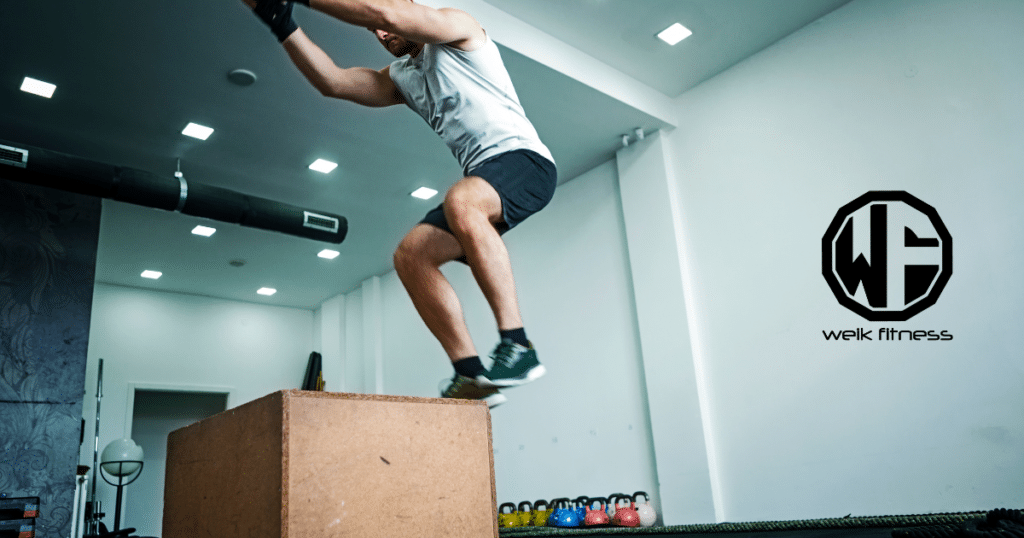
Here are five effective agility exercises you can do right at home.
1. Plyometric Jumps
Plyometric jumps, or “plyos,” are explosive exercises that build power. Place four empty gallon jugs, shoes, or agility cones if you have them, in a line about two feet apart. Stand before the first object.
Jump explosively up and over the first marker, landing softly between the first and second. Without pausing, immediately jump over the next one. Continue until you clear all four, then turn around and repeat the sequence back to the start.
Pro-Tip: The goal is to spend as little time on the ground as possible. For maximum power, your ground contact time should be under 250 milliseconds. Focus on landing quietly, like a cat, which shows your muscles are absorbing the impact correctly.
2. Sprint Intervals
This classic drill, also known as a shuttle run, builds acceleration and deceleration. Place two markers about ten yards apart. Start at the first marker and sprint to the second one. As soon as you reach it, touch the ground, then immediately change direction and sprint backward to where you started.
Pro-Tip: The most important part of this drill is learning to slow down efficiently. As you approach a marker, drop your hips, get low, and use your outside foot to brake before changing direction. This controlled stop is key to both speed and injury prevention.
3. Skier Hops
Skier hops, or lateral jumps, are fantastic for building side-to-side stability and power, which is essential for sports like tennis or skiing. Place a piece of rope or even a shoelace in a line on the ground. Stand on one side of the line.
Balancing on one foot, hop back and forth over the line ten times. Keep your movements quick and controlled. Once you finish, switch to the other foot and repeat for another ten hops.
Pro-Tip: Keep your chest up and your core tight throughout the movement. A common mistake I see is bending at the waist, which throws off your balance. Instead, bend at your knees and hips to load your glutes and legs for a more powerful hop.
4. High Knees
This may feel like a throwback to gym class, but high knees are a fundamental drill for improving running form and coordination. Begin jogging in place, but focus on driving your knees up toward your chest with each step. Your thigh should go past parallel to the floor.
Continue the movement until you have completed 20 reps on each leg.
Pro-Tip: Don’t forget your arms. Drive your elbows straight back with force. Your legs will naturally follow the rhythm of your arms, making the exercise more efficient and helping you generate more power from the ground up.
5. Zig Zag Drill
This drill trains your ability to make sharp cuts and change direction. Set up four markers in a straight line, each about three feet apart. Stand to the left of the first marker. Sprint forward and cut diagonally between the first and second markers. Then, immediately cut back between the second and third, and so on, weaving through the cones.
Once you clear the last cone, work your way back through the line to the starting point.
Pro-Tip: A low center of gravity is your best friend here. Stay in an athletic stance by bending at your knees and hips, not your waist. Staying low will give you the stability you need to make sharp, explosive cuts with precision.
You can incorporate these agility exercises as a standalone cardio workout or add them between sets during resistance training to keep your heart rate high and burn more calories.
Example Agility Workout:
*The number of circuits should match your current fitness level. If you are a beginner, start with one circuit of each exercise. As your fitness improves, you can increase the number of circuits.
| Exercise | Repetitions | Circuits |
| Plyometric Jumps | 8 total jumps | 1-5 |
| Sprint Intervals | Up and back 10 times | 1-5 |
| Skier Hops | 10 times each leg | 1-5 |
| High Knees | 20 each knee | 1-5 |
| Zig Zag Drill | 8 total sprint zig zags | 1-5 |
FAQs About Agility Exercises
How often should I do agility exercises?
For general fitness, incorporating agility exercises into your routine 2-3 times per week is a great goal. Athletes may train agility more frequently. Always allow for at least one day of rest between high-intensity agility sessions to let your body recover.
Are agility exercises good for weight loss?
Yes, they can be very effective for weight management. Agility drills are often high-intensity, which burns a significant number of calories in a short amount of time. They also help build lean muscle, which boosts your overall metabolic rate.
What is the difference between speed and agility?
Speed is the ability to move in one direction as fast as possible, like in a 100-meter dash. Agility is the ability to rapidly change direction in response to a stimulus. While related, agility requires reaction time, coordination, and balance in addition to pure speed.


*Disclosure: This article may contain affiliate links or ads, which means we earn a small commission at no extra cost to you if you make a purchase through these links. These commissions help support the operation and maintenance of our website, allowing us to continue producing free valuable content. Your support is genuinely appreciated, whether you choose to use our links or not. Thank you for being a part of our community and enjoying our content.
PLEASE CONSIDER SHARING THIS ON YOUR SOCIAL MEDIA TO HELP OTHERS LEARN MORE ABOUT THIS TOPIC.