

Best Hiking Trails in New York
If you’re looking for the best hiking trails in New York, you’ve come to the right place!
As you would guess, the hardest part of planning a hike in New York is not finding options because there are some breathtaking places you should visit. It is narrowing hundreds of trail maps, park pages, and trip reports into one route that actually fits your day.
Honestly, after going, I can’t pick just one of my favorite hikes (they were all amazing). It’s impossible to pick just one of the best hikes. That is why we built this guide to the best hiking trails in New York, with practical picks for summit days, gorge walks, and scenic mileage.
The key distinction most lists miss is access. A NY state trail can have amazing views and still be the wrong choice if it needs a permit, closes seasonally, or sits behind a parking bottleneck.
So, we kept the crowd favorites, from Watkins Glen State Park to Cascade Mountain, and paired each one with the details that help hikers make better decisions.
Many hikers chase the famous 46 high peaks, a glacier-shaped group of summits that has turned New York into a serious destination for day hikes and peak bagging.
While I went in the heat of summer, the best time to visit New York for hiking (I’d imagine) would be the fall when all the leaves are changing colors. I’d assume that would give you some fantastic views of the surrounding area while on New York hiking trails.
Below, we break down the best hikes in New York, who each trail suits best, and the safety, permit, and trailhead details worth knowing before you go.
All you’d need to do is pick your hikes, enjoy the views, walk along the cliffs, do some challenging climbs, and hit trails that offer some of the best hiking.
Table of contents
- Key Takeaways of Hikes in New York State
- Top Hiking Trails in the Mountains for Some of the Best Hikes in New York
- Scenic Hiking Opportunities in the Catskills and Hudson Valley
- Best Gorge and Waterfall Trails to Explore in New York
- How Do You Plan a Successful New York Hiking Trip?
- The Only Thing Left is to Go Hiking!
- FAQs
- References
Key Takeaways of Hikes in New York State
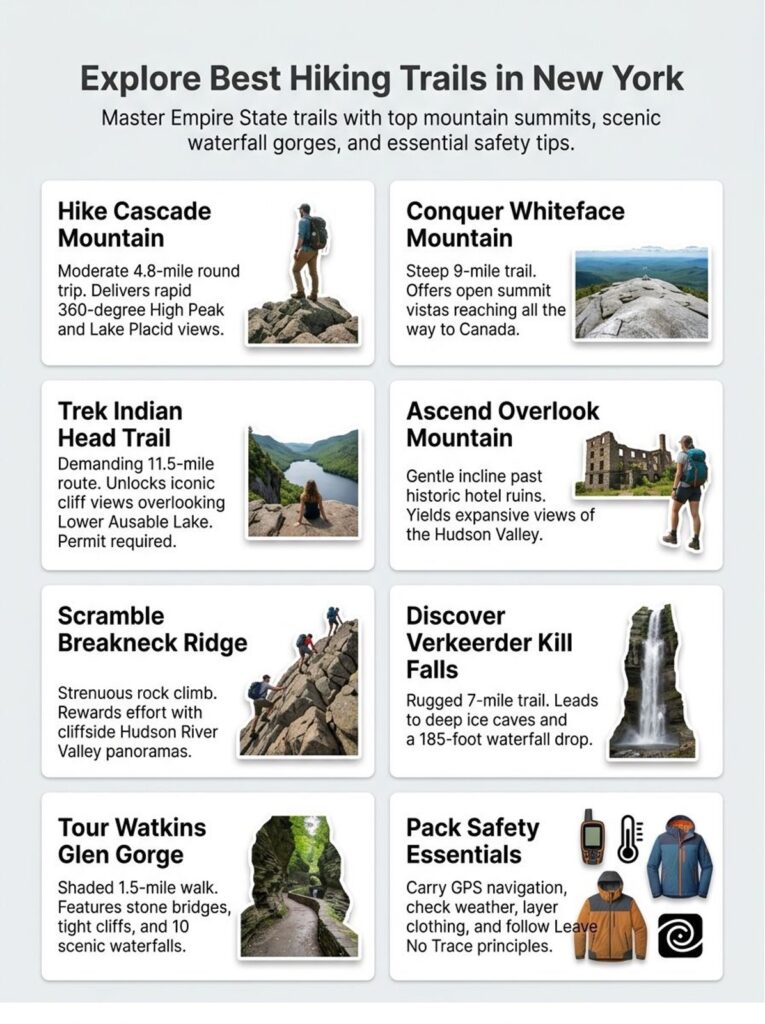
- Cascade Mountain: 4,098 feet, about 4.8 miles round trip, moderate, and one of the quickest ways to earn a High Peaks summit. The reward is wide-open mountain views, but Route 73 parking is limited, so have a backup plan.
- Whiteface Mountain: 4,867 feet, 5.2 miles each way on the Wilmington Ridge route, with nearly 3,700 feet of ascent. This is a much bigger effort than its drive-up reputation suggests.
- Indian Head: one of the most famous viewpoints in the s. Access through AMR requires a reservation from May 1 through October 31, and dogs and bikes are not allowed on the property.
- Breakneck Ridge: still iconic for Hudson River views and scrambling, but the trailhead and nearby station are closed during a major project that began April 21, 2025. Do not plan a trip here without checking current status first.
- Waterfall and gorge highlights: Watkins Glen delivers 19 waterfalls in a short gorge walk, Buttermilk Falls packs steep stone steps and spray-slick rock into a compact climb, and Verkeerder Kill Falls drops 187 feet from the high Shawangunks.
Top Hiking Trails in the Mountains for Some of the Best Hikes in New York
The mountains are where many hikers go when they want a real summit day. You get big elevation, exposed viewpoints, rugged stone footing, and the kind of trail variety that can keep both first-time peak baggers and experienced hikers busy for years.
We also like this region because the logistics matter just as much as the scenery. In the latest state planning for the High Peaks, officials again pointed to Route 73 crowding and roadside parking as a safety issue, which is why smart trail selection matters as much as fitness here.
Use our trail guides, trail maps, and interactive map tools to narrow your route around Lake Placid and the High Peaks. That makes it much easier to match the right hike to your pace, daylight, and comfort level.
What Makes Cascade Mountain a Must-Hike Trail?
Cascade Mountain is one of our favorite picks for hikers who want a true summit without committing to an all-day sufferfest. The peak tops out at 4,098 feet, the round trip is about 4.8 miles, and most hikers finish in roughly 3 to 5 hours.
The payoff feels bigger than the mileage. From the summit, you get panoramic views across the High Peaks and toward Lake Placid, which is why Cascade stays one of the most popular day hikes in the state.
What many hikers miss is that popularity changes the planning. State officials continue to warn that parking on this stretch of Route 73 is limited and no-parking zones are enforced, so an early start matters here more than on less famous routes.
- Best for: hikers who want one of the best views without a massive mileage day.
- Trail feel: steady uphill work, stone steps, short scrambly sections, and frequent view breaks.
- What to bring: sturdy hiking shoes, extra water, a paper map, and layers, even in late summer.
How Can You Conquer Whiteface Mountain?
Next on our list of the best hiking trails in New York is Whiteface. Whiteface is the hike we suggest when you want a bigger effort and a summit that feels truly alpine. The Wilmington Ridge route reaches the 4,867-foot summit in 5.2 miles one way and climbs nearly 3,700 feet, so this is a strenuous day, not a casual overlook walk.
The reward is enormous. The summit gives some of the most expansive views in the s, including Lake Placid, the Saranac Lakes region, Lake Champlain, the Green Mountains of Vermont, and, on very clear days, even Montreal.
We treat Whiteface like an exposure hike. The summit is open, wind can hit hard, and weather on top often feels very different from the nearby town, so we pack extra water, a warm layer, and trekking poles before we think about speed.
- Why it feels hard: long climbing sections, big elevation gain, and limited shelter near the top.
- Best for: strong hikers who want panoramic mountain views and a satisfying uphill challenge.
- Common mistake: underpacking because the mountain also has a scenic highway. The hiking route is still a serious workout.
What to Expect on the Indian Head Trail?
Indian Head is one of the most photographed viewpoints in the state, and the route deserves the attention. Many would consider this the best hiking trails in New York, and they aren’t wrong. The overlook sits on AMR land inside a 7,000-acre conservation easement tract, so access comes with more rules than a typical trailhead.
As of the current AMR season, hikers need a reservation from May 1 through October 31 for parking and trail access through the property. Walk-ins are not allowed, dogs are not permitted, and bicycles must stay at the parking lot, which means this trail rewards people who plan ahead.
The most direct out-and-back is about 11.5 miles round trip, and it usually feels like a full-day hike. Lake Road is the shortest approach, Gill Brook adds cascades and ladders, and Fish Hawk Cliffs offers a strong alternate viewpoint if you have the energy for more mileage.
- Best first route: Gill Brook if you want more scenery on the way to the main viewpoint.
- Why hikers love it: the final overlook above Lower Ausable Lake is one of the most dramatic lake views in New York State.
- What to plan for: a permit, an early start, and enough food and water for a near all-day outing.
Scenic Hiking Opportunities in the Catskills and Hudson Valley
If the previous hikes are about summits, the Catskills and Hudson Valley are about variety. In Catskill you can climb to a fire tower in the morning, walk a cliffside carriage road by lunch, and still be back near town for dinner. My kids loved these hiking trails in New York as they weren’t super difficult.
This region also works well for hikers near NYC. It’s not what people think of New York, and to me, that’s a good thing. There are views that stretch for miles and miles. Several routes sit within day-trip range, but the best picks are the ones that balance scenery with realistic access, trail condition, and current closures.
You’ll love the Catskills and views of the Hudson Valley.
Why Climb Overlook Mountain for Amazing Views?
Overlook Mountain is one of our favorite scenic hikes near NYC because the route gives you several payoffs in one outing. The main climb follows an old carriage road for 2.4 miles one way, which keeps the route straightforward even though the uphill never really quits.
At about 1.6 miles, you reach the ruins of the unfinished Overlook Mountain House at roughly 2,900 feet. Keep going, and you will reach the 3,140-foot summit area, the historic fire tower, and a ledge with views of the Hudson River Valley, the Ashokan Reservoir, and the central Catskills.
This is a strong choice for hikers who want history, a fire tower, and big views without technical scrambling. Just stay outside the ruins, watch your footing on the ledges, and expect company because this is one of the Catskills’ most visited hikes.
- Best for: hikers who want a moderate climb with fire tower rewards.
- Standout features: hotel ruins, Hudson views, and a classic Catskills summit feel.
- Good to know: the grade is steady, not brutal, but it is not flat and easy.
How Difficult Is the Breakneck Ridge Trail?
Breakneck Ridge earned its reputation because it packs steep rock scrambling and huge views of the Hudson River into a relatively short route. When it is open, it is one of the most dramatic hikes in New York State.
Right now, the most useful detail is the one many roundups skip. State Parks lists the Breakneck Ridge trailhead, nearby connecting trails, and the adjacent Breakneck Ridge station as closed for a two-year project that began on April 21, 2025.
Plan around the closure, not around the legend. If Breakneck is on your list, choose another Hudson Highlands hike until the official reopening is confirmed.
Once the route is available again, expect a short but intense day. Trailhead signage for the main loops points hikers to options of about 2.8 miles in 2 hours or 4.5 miles in 4 hours, which tells you a lot about how steep and slow the terrain can feel.
What Is the Experience Like on the Verkeerder Kill Falls Hike?
Verkeerder Kill Falls is the Catskills and Shawangunks pick we recommend to hikers who want a bigger day with a memorable finish. The waterfall drops 187 feet, making it one of the standout waterfall hikes in this part of New York.
The route from Sam’s Point feels different from a typical forest hike. You cross high, open ground, pass the ice caves area, and move through a globally rare dwarf pine barrens landscape before the trail tips you toward the falls.
The trail is scenic, but the logistics matter. Sam’s Point has a small parking area. Reservations are required on weekends and holidays from mid-April through mid-November, and the park asks visitors not to park on nearby road shoulders.
- Best for: hikers who want a longer scenic hike with a true destination at the end.
- Trail feel: exposed sections, rocky footing, and longer stretches where pace matters.
- Pro tip: start early, carry more water than you think you need, and treat this as a weather-sensitive hike because shade is limited on parts of the route.
Best Gorge and Waterfall Trails to Explore in New York
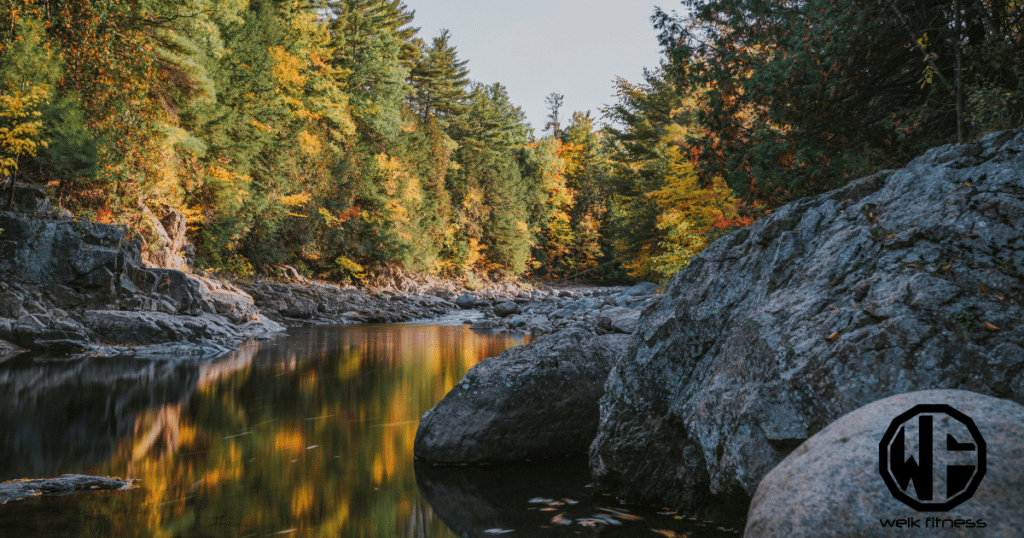
The hiking trails in New York don’t disappoint with all the waterfalls. The state gives you everything from family-friendly gorge walks to steeper stone-step climbs where spray, slick rock, and narrow turns can change the pace fast.
This is also where current park rules matter most. Gorge trails often close seasonally, pet rules change by park, and water access can look safer from a photo than it feels on wet stone.
What Will You See on the Watkins Glen State Park Gorge Trail?
Watkins Glen is the waterfall hike we suggest when you want maximum scenery for a relatively short effort. The park’s stream drops 400 feet within two miles and creates 19 waterfalls, which is why this trail feels cinematic almost from the first set of steps.
The gorge route itself typically opens from mid to late May and usually closes from mid to late October, depending on weather. The rim trails stay open year-round, so shoulder-season visitors can still hike here, just not through the full gorge corridor.
One rule is easy to miss and worth knowing before you drive out: pets are not allowed on the Gorge Trail. That single detail changes whether Watkins Glen is your best family hike for the day or whether you should save it for a trip without the dog.
- Best for: first-time visitors, photographers, and hikers who want a short route with major scenic payoff.
- What the trail feels like: stone bridges, stairways, shaded walls, and constant waterfall views.
- Best times: spring for stronger runoff and early fall for foliage around the gorge.
How to Enjoy the Buttermilk Falls Gorge Trail Safely?
Buttermilk Falls works well for hikers who want a shorter hike with real effort packed into it. The gorge trail climbs about 600 feet from the base of the falls to just past Pinnacle Rock, and the many stone steps make it more strenuous than the mileage suggests.
The lower park also has a natural pool, but swimming schedules can shift with staffing and conditions. In the current season, park guidance has warned that swimming may close by mid-August, so hikers who want both a hike and a swim should check the park alert before driving out.
We treat Buttermilk as a traction hike. Wet rock, spray, and uneven steps are the real challenge here, not route-finding.
- Wear waterproof boots or trail shoes with strong grip, and bring trekking poles if you dislike slick stone.
- Move deliberately on the stone steps, especially near the base of the falls where mist can hide slick spots.
- Stay on marked paths and ignore tempting edges near pools and drop-offs.
- Go early on weekends if you want easier parking and cleaner photo stops.
- Keep valuables out of sight in your vehicle, because the park has warned visitors about thefts from trailhead parking in the Ithaca area.
- If you are hiking with a dog, know that pets are allowed in day-use areas on leash, but they are not permitted in certain built or guarded areas.
What Adventures Await in Ausable Chasm?
Ausable Chasm stands out because it is not just a hike. It is a layered adventure area that mixes scenic walking trails, river access, suspension bridges, and a guided via ferrata experience that turns a simple day hike into something closer to a climbing outing.
For hikers who want the classic scenic version, the walking routes give you sandstone walls, river views, and plenty of shorter options.
For people who want more adrenaline, the guided Adventure Trail via ferrata uses fixed cables, bridges, and edge walks to move you through a part of the chasm that regular visitors do not reach on foot.
| Experience | Best For | What to Know |
| Scenic walking trails | Families and casual hikers | Shorter mileage, dramatic rock-and-river scenery, and flexible pacing. |
| Adventure Trail via ferrata | Hikers who want a guided climbing-style challenge | Participants must be at least 8 years old, have a 63-inch reach, and weigh between 50 and 250 pounds. |
| Rappelling add-on | Visitors who want a more technical guided outing | This guided activity runs about 2 hours and is for ages 13 and up. |
The big takeaway is simple: Ausable Chasm suits more than one kind of hiker. Pick the scenic walk if you want a picturesque day, or book the guided route if you want outdoor adventures with real exposure and instruction.
How Do You Plan a Successful New York Hiking Trip?
The best New York hike is the one that matches the season, daylight, and your actual energy level. If you’re lacking energy or are sore, some of the hiking trails in New York may not be the best option. You just need to plan accordingly.
We rely on topographic maps, a charged phone with offline navigation, a paper backup map, and a weather check that focuses on the mountain or gorge we are actually visiting.
Permits, seasonal trail openings, and closure alerts matter more here than many hikers expect. A great route on paper can be the wrong call if spring mud, limited parking, or a reservation rule changes the day.
If you’re traveling, be sure to pack some snacks for the way (especially if you have kids). Also, you’ll want some hiking snacks for your adventure as well. We have a full article on hiking snacks to fuel your time on the trails.
When Are the Best Times to Hike in New York?
New York gives hikers a real four-season calendar, but each season favors a different kind of trail.
Historically, foliage begins first at higher elevations in the Catskills in early September, with many mountain areas peaking from late September into mid-October.
| Season | When | Why Hike | What to Bring |
| Fall | Late September to mid-October for many mountain areas | Peak foliage and cooler air make long hikes more comfortable. High-elevation routes in the s and Catskills are often at their most photogenic. | Layered clothing. Trail map and offline navigation. Headlamp for shorter daylight. |
| Summer | June through August | Long daylight hours help with bigger summit days. Waterfall hikes and swimming spots are most appealing. | Sun protection. Extra water and electrolytes. Insect repellent. |
| Spring | April through May | Waterfalls run strong. Lower-elevation trails often make better choices than high peaks because mud season can be rough. | Waterproof boots and gaiters. Trekking poles. Spare socks and traction if conditions call for it. |
| Winter | December through March | Quiet trails and clear views can be excellent. Conditions turn serious fast. | Snowshoes or traction. Warm layers. Emergency insulation and a headlamp. |
| Best All-Around | Fall for scenery, summer for access | Fall is best for foliage and cooler hiking temperatures. Summer is best for longer day hikes, gorge openings, and easier trail access. | Seasonal layers. First aid kit. Any required trail permit or reservation confirmation. |
What Safety Tips Should Hikers of All Levels Follow?
We plan every hike around hiking safety, not just distance. New York’s terrain changes fast, and the smallest mistakes usually happen on popular hikes where people assume the route will feel easier than it does.
That is especially true in tick season. A 2025 New York State tick-borne disease report logged 18,704 confirmed or probable Lyme disease cases in 2024 outside New York City, which is a strong reason to treat repellent and post-hike tick checks as standard gear, not optional extras.
- Tell a friend your route, trailhead, and expected return time. This is still the fastest way to make a delayed return easier to respond to.
- Check weather, trail alerts, and seasonal closures before leaving home. A great trail can become a poor choice if a gorge closes or a summit forecast turns windy and wet.
- Carry navigation tools you can use without service. We like a paper map, compass, and downloaded phone map as a practical three-part system.
- Pack the basics from DEC’s Hike Smart NY approach: headlamp, extra clothing, first aid, food, and enough water for longer-than-planned time on trail.
- Wear footwear that matches the route. Gorge trails need grip, High Peaks need ankle confidence and durability, and muddy spring hikes reward waterproofing.
- Use tick protection in brushy or wooded areas. Wear long pants when practical, apply repellent, and do a full tick check after the hike.
- Stay on trail and follow Leave No Trace rules. This protects fragile plants, keeps trail edges from widening, and makes popular routes more sustainable for the next hiker.
The Only Thing Left is to Go Hiking!
If you love the outdoors, the hiking trails in New York are some of the best.
RELATED: A Guide to Trail Running
New York delivers an unusually deep bench of hikes, from Whiteface Mountain and Cascade to Watkins Glen and Buttermilk Falls. That range is exactly why the best hikes in New York depend on what kind of day you want, not just what looks best in a photo.
We pack water, layers, navigation, and a first aid kit every time.
Pick the route that fits your pace, respect permits, and trail conditions, and these scenic trails will reward you with summit views, gorge walls, and some of the best day hikes in New York State.
FAQs
Look in the Catskills and the Hudson Valley for top hiking trails. Expect high mountain summits, steep riverfront ridges, and coastal bluff walks, all with great scenic views.
Check the trail length and elevation gain. Easy hikes run 1 to 3 miles with under 500 feet of gain, moderate hikes run 4 to 8 miles with 500 to 1,500 feet, and hard hikes go longer with more gain.
Most day hikes need no permit, but some state parks charge parking fees or require seasonal permits. Always check the trailhead signs and park websites before you go.
Carry a paper map, extra water, and layers, and tell someone your route; cell signal is spotty in remote areas. Do not assume short trails lack hazards, and watch for seasonal weather, trail difficulty, park rules on dogs, and bear safety tips.
References
- https://www.facebook.com/groups/9003421258/posts/10161261093701259/
- https://www.facebook.com/groups/317843086751551/posts/1316471033555413/
- https://caitypfohl.com/2020/09/30/ten-beautiful-s-hikes/
- https://pures.com/blogs/-hiking/indian-head-vista-fish-hawk-cliffs
- https://www.facebook.com/groups/hikingthehudsonvalley/posts/4454368208141439/
- https://www.facebook.com/groups/hikingthehudsonvalley/posts/2822837377961205/
- https://www.alltrails.com/trail/us/new-york/sams-point-and-verkeerderkill-falls-trail
- https://www.facebook.com/groups/765048086878344/posts/24778081631814987/
- https://www.facebook.com/JohnKuckoDigital/posts/the-beauty-of-the-gorgewalk-with-me-enchanting-buttermilk-falls-in-ithaca-ny-wit/1589377819522614/
- https://www.nytimes.com/2026/07/22/travel/hiking-acrophobic-ausable-chasm-s.html
- https://theadventuresatlas.com/best-hikes-in-upstate-new-york/
- https://beyondthebucketlist.co/9-best-hikes-in-new-york-state/
- https://www.iloveny.com/stories/blog/post/beginners-guide-to-hiking-in-new-york-state/
- https://dec.ny.gov/things-to-do/hiking/hike-smart-ny